
- Products
- Hydraulic seals
- Hoses and fittings
- Filtration
- Measurement and sensors
- Valves
- Directional valves
- Proportional valves
- Relief valves
- Check valves
- Counterbalance valves
- Sequence valves
- Pressure reducing valves
- Flow restrictors
- Flow control valves
- Flow dividers
- High-Low Valves
- End-of-stroke valves
- Ball Valves
- Other Valves
- Monoblock and sectional valves
- Coils, connectors and electronics
- NEM - Cartridge valves
- Manifold blocks and subplates
- Pressure intensifiers
- Hidro Orfão Systems
- Pumps
- Transmission
- Motors
- Accumulators
- Cooling
- Mini power packs
- Crimping machines
- Industrial consumables
- Pneumatics - End of stock
- Push-in fittings
- Brass and compression fittings
- Flow regulators and check valves
- Air treatment
- Coils and connectors
- Directional valves and solenoid valves
- Manual and mechanical valves
- Solenoid valves for fluids
- Silencers
- Pneumatic tubes
- Pneumatic cylinders
- Cylinder accessories
- Cylinder and seal kits
- Panel controls
- MEB electric motors
- Brands
- Technical library
- Guided search








Pressure gauges
Pressure gauges for hydraulic circuits, arranged by dial diameter: DN40, DN50, DN63 and DN100, digital gauges and other. "Other" contains the three-colour filter gauges, the vacuum-pressure gauge and the isolators. How to choose a pressure gauge: Scale: about…
Read moreSubcategories
-

DN40 gauges
40 mm dial pressure gauges, bottom or back entry, with or without front flange, in several scale ranges.
This is the smallest size, for places with little space. Choose the scale so that the working pressure sits in the middle of the dial, the connection (bottom entry or back entry) and, for panel mounting, the flanged version. To protect the gauge from peaks, see the isolators under Other gauges and the test points.
-

DN50 gauges
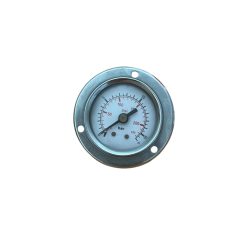
50 mm dial pressure gauges, bottom or back entry, with or without front flange, in several scale ranges.
There are 0-6 bar models with 1/8" thread and flange, and 0-12 bar models with 1/4" thread, for low pressures. Choose the scale so that the working pressure sits in the middle of the dial, the connection (bottom entry or back entry) and, for panel mounting, the flanged version. To protect the gauge from peaks, see the isolators under Other gauges and the test points.
-

DN63 gauges
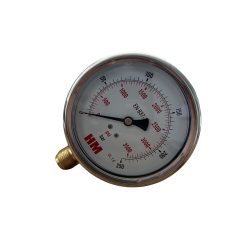
63 mm dial pressure gauges, bottom or back entry, with or without front flange, in several scale ranges.
This is the diameter most used on machines and hydraulic power units; there are two ranges, standard and HM, both bottom and back entry. Choose the scale so that the working pressure sits in the middle of the dial, the connection (bottom entry or back entry) and, for panel mounting, the flanged version. To protect the gauge from peaks, see the isolators under Other gauges and the test points.
-

DN100 gauges
100 mm dial pressure gauges, bottom or back entry, with or without front flange, in several scale ranges.
It is easy to read from a distance, so it is used on panels and test benches; there is also a DN100 gauge with electrical contact. Choose the scale so that the working pressure sits in the middle of the dial, the connection (bottom entry or back entry) and, for panel mounting, the flanged version. To protect the gauge from peaks, see the isolators under Other gauges and the test points.
-

Digital gauges
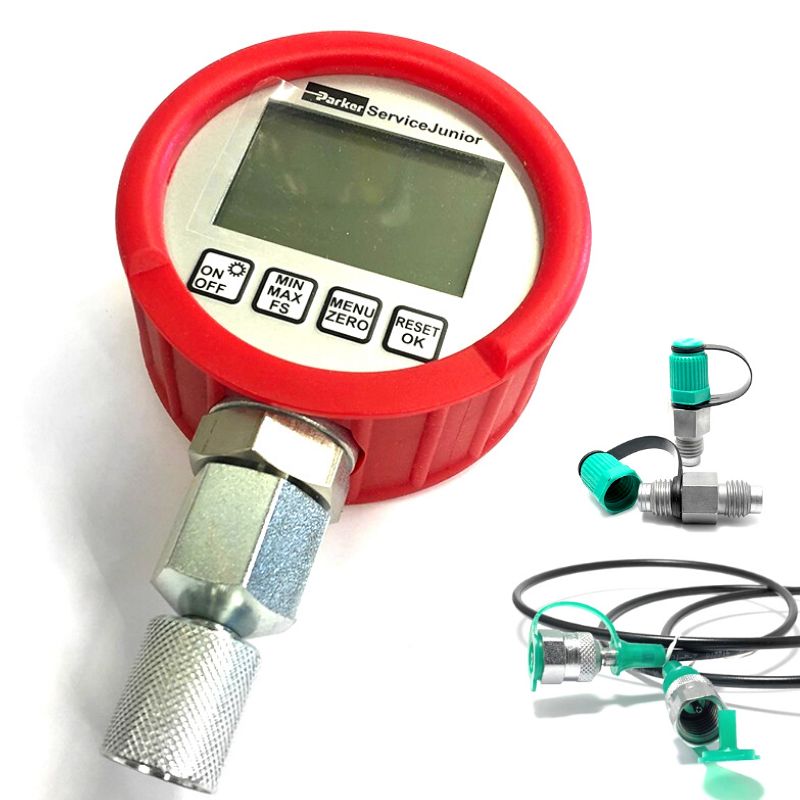
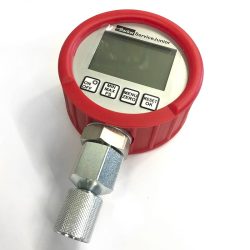
Digital gauges for measuring and recording pressure in service: Parker Service Junior SCJN-600-0, up to 600 bar.
A digital gauge reads accurately and stores the maximum and minimum values, catching pressure peaks that a needle gauge does not show. It connects to a test point on the machine with a test hose. For more complete measurements, see the diagnostic kits.
-

Other gauges
Filter clogging gauges, vacuum-pressure gauge and gauge isolators.
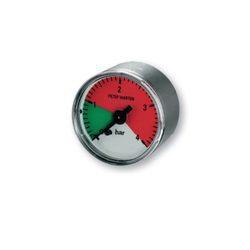
- Three-colour gauges, bottom and back entry, and Argo-Hytos DG 200-06 gauge: the coloured dial shows whether the filter is clean, half clogged or clogged;
- Vacuum-pressure gauge: measures pressure and vacuum, for example on the pump suction;
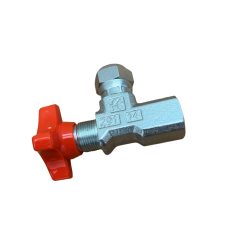
- Gauge isolator Tognella FT291-01 1/4": only lets pressure through to the gauge when pressed, protecting it from peaks.
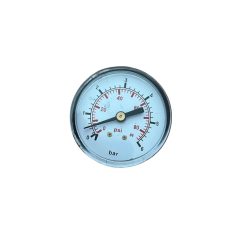
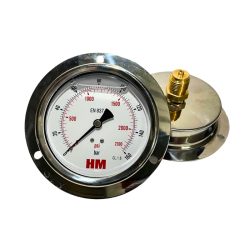


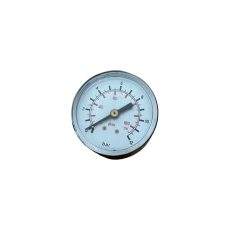




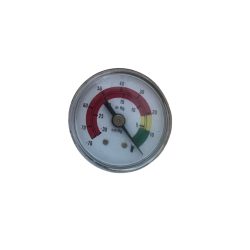
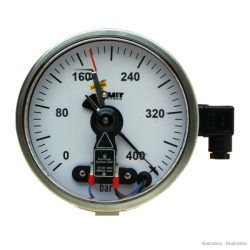


Pressure gauges for hydraulic circuits, arranged by dial diameter: DN40, DN50, DN63 and DN100, digital gauges and other.
"Other" contains the three-colour filter gauges, the vacuum-pressure gauge and the isolators.
How to choose a pressure gauge:
- Scale: about one and a half to two times the working pressure, so the needle works in the middle of the dial (for example 0-400 bar for a 210 bar circuit);
- Connection: bottom entry or back entry, usually 1/4" BSP;
- Front flange for panel mounting, if needed;
- Diameter: DN63 is the most common; DN100 is easier to read from a distance;
- Glycerine filling, which damps vibration and pulsation and protects the mechanism.
A gauge that is always under pressure wears faster with the peaks. To protect it, fit a gauge isolator (opened only when you want to read) or connect it only when needed, through a test point and a test hose.
Digital gauges and diagnostic kits record peaks and minimum values, which helps to find faults. See also Measurement and sensors.
Are you an OEM? Reseller? Workshop?