
- Products
- Hydraulic seals
- Hoses and fittings
- Filtration
- Measurement and sensors
- Valves
- Directional valves
- Proportional valves
- Relief valves
- Check valves
- Counterbalance valves
- Sequence valves
- Pressure reducing valves
- Flow restrictors
- Flow control valves
- Flow dividers
- High-Low Valves
- End-of-stroke valves
- Ball Valves
- Other Valves
- Monoblock and sectional valves
- Coils, connectors and electronics
- NEM - Cartridge valves
- Manifold blocks and subplates
- Pressure intensifiers
- Hidro Orfão Systems
- Pumps
- Transmission
- Motors
- Accumulators
- Cooling
- Mini power packs
- Crimping machines
- Industrial consumables
- Pneumatics - End of stock
- Push-in fittings
- Brass and compression fittings
- Flow regulators and check valves
- Air treatment
- Coils and connectors
- Directional valves and solenoid valves
- Manual and mechanical valves
- Solenoid valves for fluids
- Silencers
- Pneumatic tubes
- Pneumatic cylinders
- Cylinder accessories
- Cylinder and seal kits
- Panel controls
- MEB electric motors
- Brands
- Technical library
- Guided search








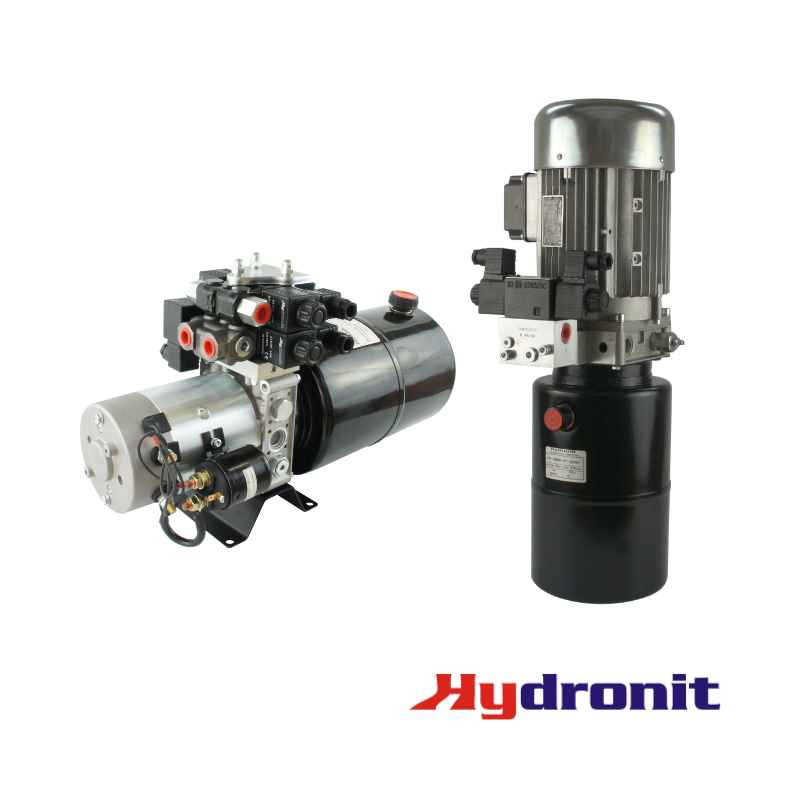
Directional valves
Directional valves send the oil to one side or the other of the circuit: they extend and retract a cylinder, turn a motor one way or the other, or stop the movement. They are arranged by size and mounting type: NG4 (CETOP 2), NG6 (CETOP 3), NG10 (CETOP 5),…
Read moreSubcategories
-

NG4 (CETOP 2)
NG4 (CETOP 2) directional valves, ISO 4401-02 interface: Duplomatic DL2, Vickers DG4V-2 and Argo-Hytos RPE3 solenoid valves.
NG4 (CETOP 2) is the smallest subplate valve size, for low flows and compact manifolds. The interface is standard, so the valve fits an NG4 subplate from another brand; always check the spool (the symbol for each position), the coil voltage and current type and the manual override. The plate code of the old valve gives all of this. Replacement coils are under Coils.
Technical guide: How to choose a hydraulic valve
-

NG6 (CETOP 3)
NG6 (CETOP 3) valves, also called D03, mount on a subplate with the ISO 4401-03 interface. They are the most widely used subplate valves on small and medium power units.
They handle flows up to about 60 to 80 l/min, depending on the model. Here you will find:
- Duplomatic DS3 solenoid directional valves, with the various spools (for example S2, S3, RK, 23TB) and DC and AC coils, and the DS3M with spool position monitoring;
- Hydraulically (DSC3) and pneumatically (DSA3) operated valves, Vickers DG4V-3 and Argo-Hytos RPE3 solenoid valves, and the DSB3 self-reversing valve;
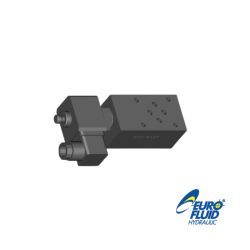
- NG6 modular valves (sandwich), such as the MDS3 and the Eurofluid EREM sandwich, which stack between the subplate and the solenoid valve.
How to choose: (1) the spool, that is, what the valve does in each position (see the symbol on the plate or the datasheet); (2) the coil voltage and current type; (3) the operator type (with or without manual override). The plate code of the old valve gives all of this: search for it.
To find the equivalent from another brand, see the NG6 valve equivalences page. Replacement coils are under Coils and subplates and manifolds under Manifolds and subplates.
Technical guide: How to choose a hydraulic valve
-

NG10 (CETOP 5)
NG10 (CETOP 5) valves, also called D05, mount on a subplate with the standard ISO 4401-05 interface. They handle larger flows than NG6 (CETOP 3), on medium-power power units and machines.
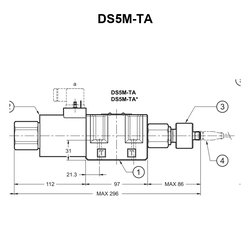
Here you will find Duplomatic DS5 solenoid directional valves, with the various spools and DC and AC coils, the DS5M with spool position monitoring, the DSP5 pilot-operated solenoid valves and the DSB5 self-reversing valve. DSE5 proportional valves are under CETOP proportional valves.
How to choose:
- the spool: the connection pattern in each position (closed centre, open, tandem...), shown on the valve plate;
- the coil: voltage (12 V, 24 V DC, 110 or 230 V AC) and plug type;
- the maximum flow and pressure of the circuit;
- on pilot-operated valves, whether the pilot is internal or external and the drain internal or external.
The interface is standard: an NG10 (CETOP 5) from another brand fits the same subplate, but always check the spool. The code marked on the old valve is the quickest route: search for it in the search box. Replacement coils are under Coils.
Technical guide: How to choose a hydraulic valve
-

NG16 (CETOP 7)
NG16 (CETOP 7) directional valves, ISO 4401-07 interface: Duplomatic DSP7 pilot-operated solenoid valves and the DSP7-10-C valve.
At this size the coil does not move the main spool directly: it operates a small pilot valve which, using oil pressure, shifts the large spool. So, besides the spool and the coil voltage, check whether the pilot is internal or external, whether the drain is internal or external, and the minimum pilot pressure. The plate code of the old valve gives all of this: search for it. Coils are under Coils.
Technical guide: How to choose a hydraulic valve
-

NG25 (CETOP 8)
NG25 (CETOP 8) directional valves, ISO 4401-08 interface: Duplomatic DSP8 / E5P4 pilot-operated solenoid valves.
At this size the coil does not move the main spool directly: it operates a small pilot valve which, using oil pressure, shifts the large spool. So, besides the spool and the coil voltage, check whether the pilot is internal or external, whether the drain is internal or external, and the minimum pilot pressure. The plate code of the old valve gives all of this: search for it. Coils are under Coils.
Technical guide: How to choose a hydraulic valve
-

NG32 (CETOP 10)
NG32 (CETOP 10) directional valves, ISO 4401-10 interface: Duplomatic DSP10 pilot-operated solenoid valves.
At this size the coil does not move the main spool directly: it operates a small pilot valve which, using oil pressure, shifts the large spool. So, besides the spool and the coil voltage, check whether the pilot is internal or external, whether the drain is internal or external, and the minimum pilot pressure. The plate code of the old valve gives all of this: search for it. Coils are under Coils.
Technical guide: How to choose a hydraulic valve
-

Cartridge directional valves
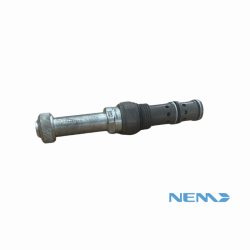
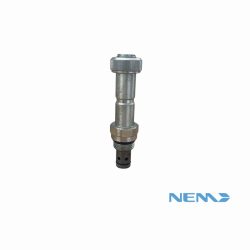
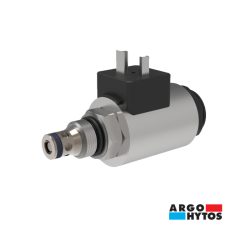
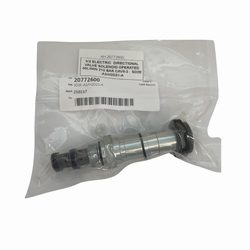
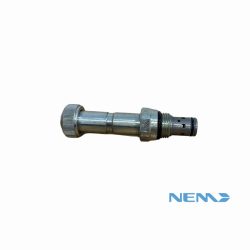
NEM and Argo-Hytos cartridge solenoid directional valves for fitting in manifolds: 2/2, 3/2, 4/2 and 4/3, poppet and spool type. Choose by cavity.
The cartridge screws into a standard cavity in the manifold (for example CAV10-4) and the coil fits on top. Poppet valves (2/2 direct-acting, pilot-operated and double poppet) close with virtually no leakage and are used to hold a load; spool valves (2/2, 4/2, 4/3) allow multi-way circuits, with a small internal leakage. Argo-Hytos offers the SD1E, SD2E and SD3E series; there is also a NEM CAV10-4 fixed directional valve.
To choose: the cavity, the function (number of ways and positions, normally open or closed), the flow and the coil voltage. Bodies and manifolds for cartridges are under Manifolds and subplates and coils under Coils.
Technical guide: How to choose a hydraulic valve
-

In-line directional valves
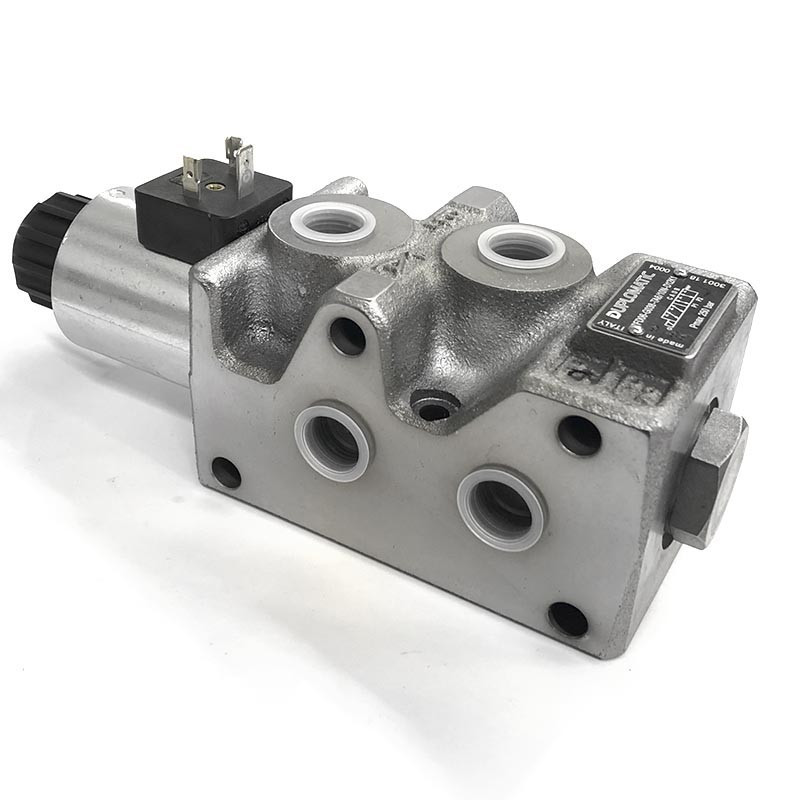
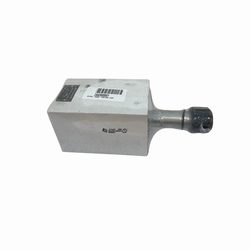
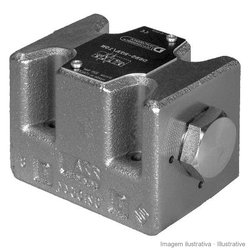
In-line directional valves with threaded ports: Duplomatic BFD06 3/8" and BFD10 1/2" 6-way valves, without coils.
A 6-way valve diverts oil from one outlet to two circuits, for example to operate two functions from a single lever on a tractor or crane. It is fitted directly in the pipework, without a subplate. Coils are sold separately: check the voltage under Coils.
Technical guide: How to choose a hydraulic valve
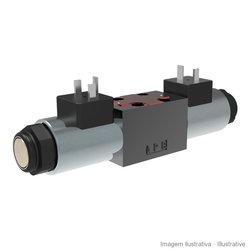
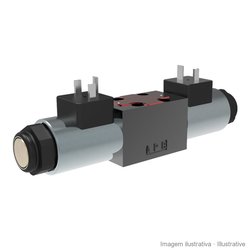
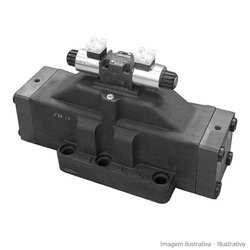
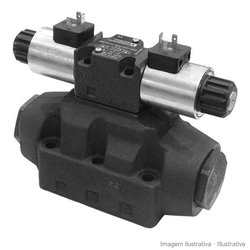
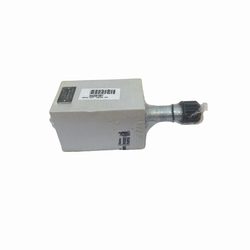

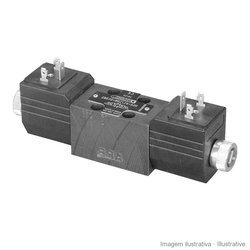
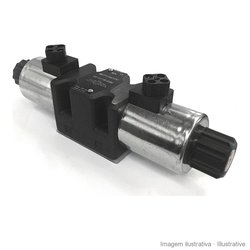
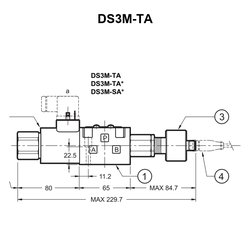
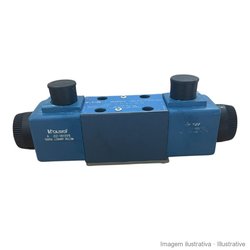
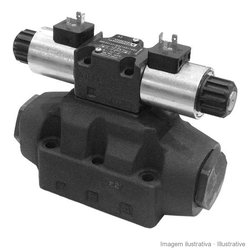
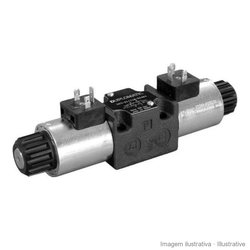

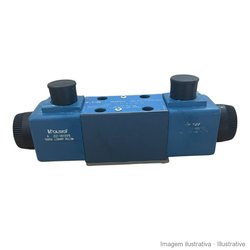
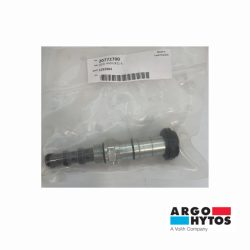
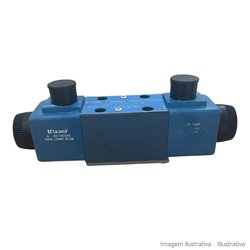
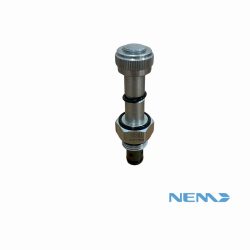
Directional valves send the oil to one side or the other of the circuit: they extend and retract a cylinder, turn a motor one way or the other, or stop the movement.
They are arranged by size and mounting type:
- NG4 (CETOP 2), NG6 (CETOP 3), NG10 (CETOP 5), NG16 (CETOP 7), NG25 (CETOP 8) and NG32 (CETOP 10): standard subplate mounting;
- Cartridge directional valves, for fitting in manifolds;
- In-line directional valves, with threads directly on the valve.
You will find Duplomatic, Argo-Hytos, Hydac and NEM solenoid valves, with solenoid, manual or pilot operation. Size (NG) goes with flow: the larger the NG, the more flow the valve passes.
To replace a valve, the code on the plate gives the size, the spool (what the valve does in each position) and the coil voltage. Search for that code. Without a code, you need the size or thread, the spool symbol, the coil voltage and current type (for example 24 V DC) and whether it has a manual override. Replacement coils are under Coils.
Technical guide: How to choose a hydraulic valve
Are you an OEM? Reseller? Workshop?