
- Products
- Hydraulic seals
- Hoses and fittings
- Filtration
- Measurement and sensors
- Valves
- Directional valves
- Proportional valves
- Relief valves
- Check valves
- Counterbalance valves
- Sequence valves
- Pressure reducing valves
- Flow restrictors
- Flow control valves
- Flow dividers
- High-Low Valves
- End-of-stroke valves
- Ball Valves
- Other Valves
- Monoblock and sectional valves
- Coils, connectors and electronics
- NEM - Cartridge valves
- Manifold blocks and subplates
- Pressure intensifiers
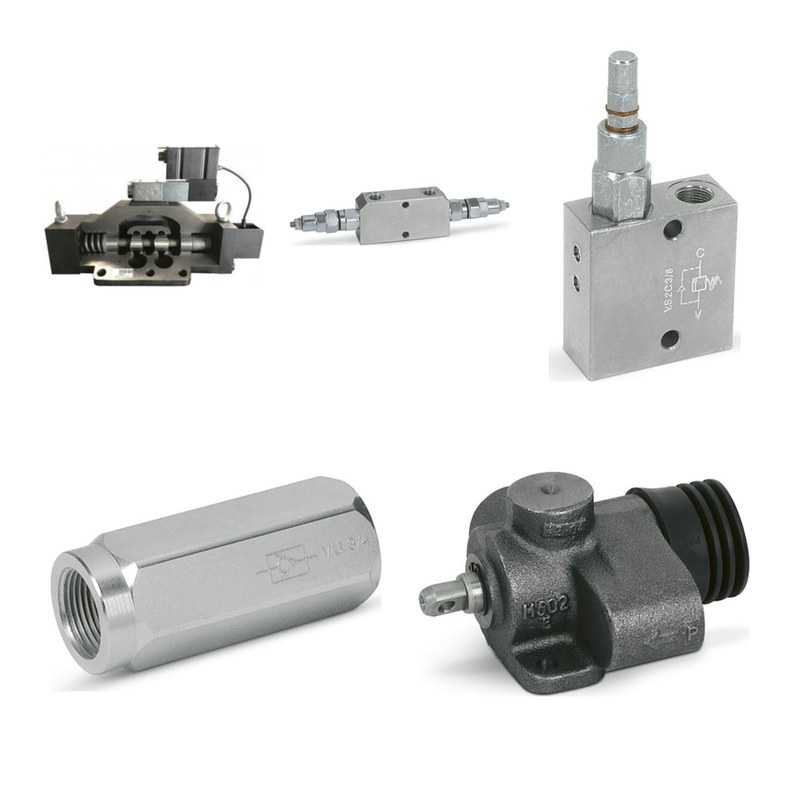
- Hidro Orfão Systems
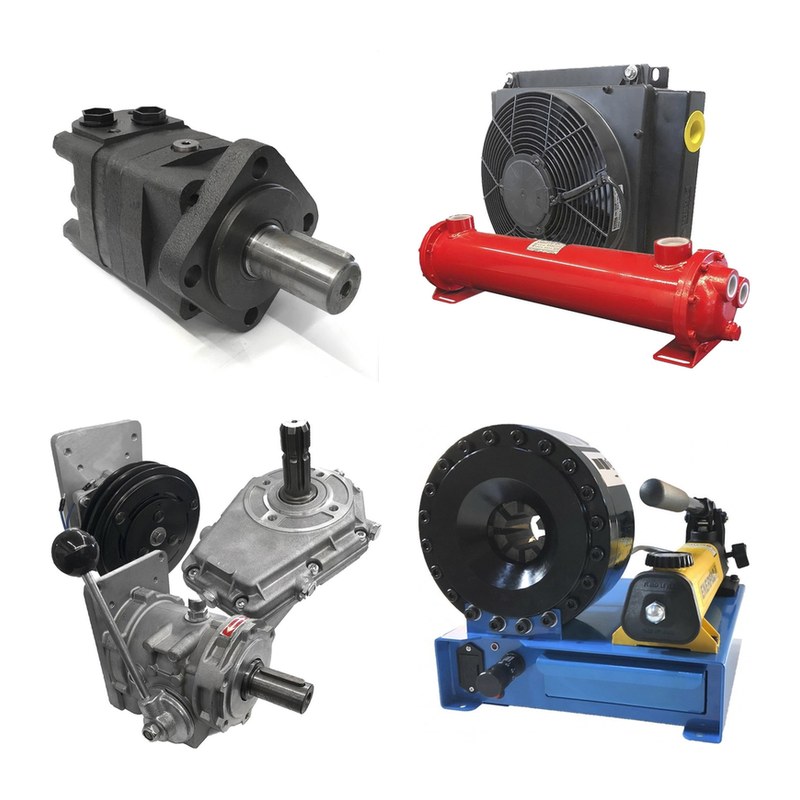
- Pumps
- Transmission
- Motors
- Accumulators
- Cooling
- Mini power packs
- Crimping machines
- Industrial consumables
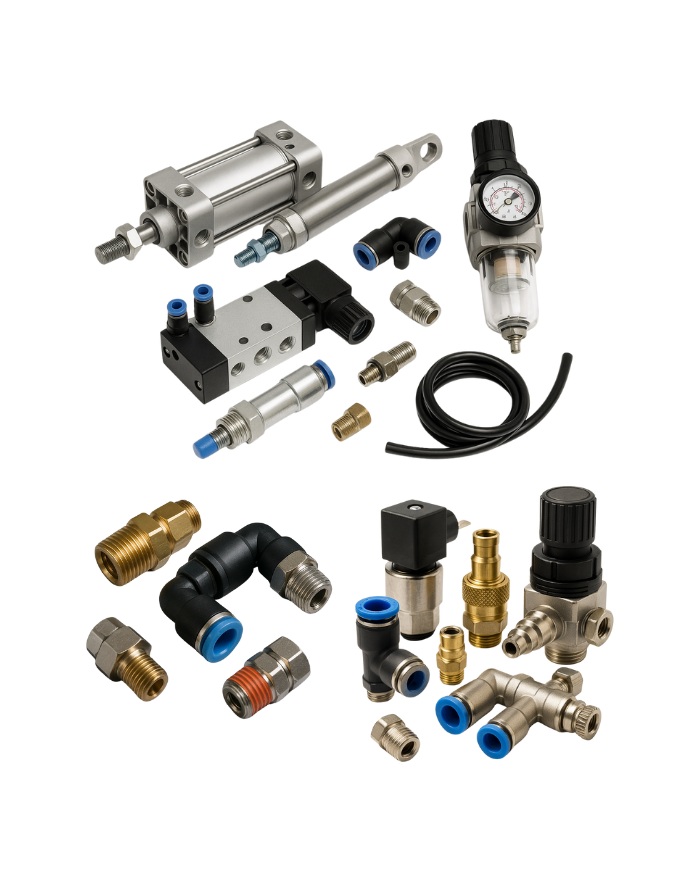
- Pneumatics - End of stock
- Push-in fittings
- Brass and compression fittings
- Flow regulators and check valves
- Air treatment
- Coils and connectors
- Directional valves and solenoid valves
- Manual and mechanical valves
- Solenoid valves for fluids
- Silencers
- Pneumatic tubes
- Pneumatic cylinders
- Cylinder accessories
- Cylinder and seal kits
- Panel controls
- MEB electric motors
- Brands
- Technical library
- Guided search
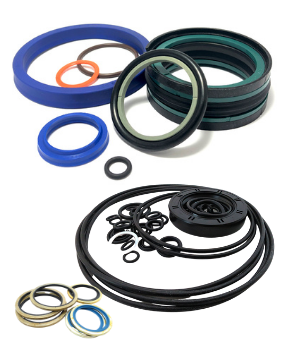








Hydraulic seals
Seals for hydraulic cylinders, pumps, motors and valves: rod and piston seals, wipers, guide rings, O-rings, shaft seals and seal kits, in stock and by size. In this section you will find: Rod seals (TTU, TTI, TTS, IGR and chevron), which stop oil leaking out…
Read moreSubcategories
-

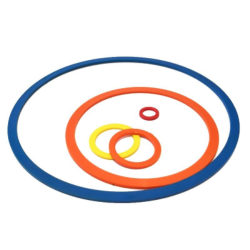
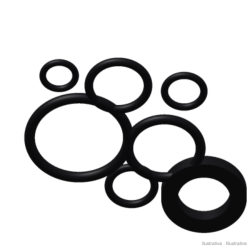
O-rings
NBR and Viton (FKM) O-rings in the common cross-sections, O-ring cord by the metre, X-rings, quad-rings and DIN 3869 rings, for static sealing and slow movements.
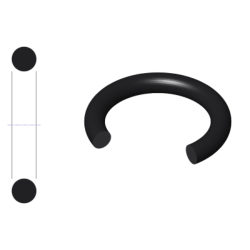
The O-ring is the simplest and most widely used seal in hydraulics: a rubber ring of round cross-section that seals by compression in a groove. It works best as a static seal (covers, flanges, adapters, cartridges), but is also used for slow movements.
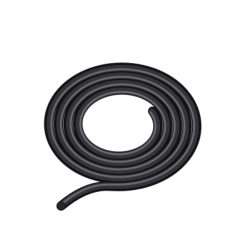
We stock O-rings in NBR (mineral oil, the normal choice) and in Viton (FKM) (higher temperatures and some special fluids), in the common cross-sections from 1.78 to 6.99 mm and in metric cross-sections (1.5, 2, 2.5, 3, 3.5, 4, 5, 5.7, 6 and 8.4 mm), plus O-ring cord by the metre to make rings to size.
How to measure: an O-ring is identified by its inside diameter and its cross-section (the thickness of the ring). Start with the cross-section, choose the product for that section and then the inside diameter from the table on the product page. A used O-ring is deformed; if you can, measure the groove.
With large clearances or high pressures the O-ring can be forced into the gap (extrusion). In that case fit a back-up ring on the side away from the pressure, or one on each side if pressure acts in both directions.
You can also search by dimensions in the seal finder.
Technical guide: How to choose a hydraulic seal
-

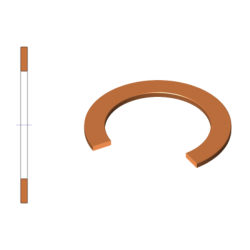
Back-up rings
Aston Seal back-up rings for O-rings, for the most common cross-sections: 1.6, 1.78, 2, 2.4, 2.62, 3, 3.53, 4, 4.5, 5.33, 5.7, 6 and 6.99 mm.
With large clearances or high pressures, the pressure pushes the O-ring into the gap between the parts. The O-ring is nibbled (extrusion), starts to lose pieces and stops sealing. The harder back-up ring sits against the O-ring on the gap side and stops it being pushed in.
How to fit:
- With pressure from one side only: one ring on the side away from the pressure;
- With pressure from both sides (on a piston, for example): one ring on each side of the O-ring;
- The groove must be wide enough for the O-ring and the ring.
How to choose: the O-ring cross-section and the rod or groove diameter. The rings come solid or split (spiral or open), and the split versions fit without dismantling the part.
O-rings have their own category, and the seal finder searches by dimensions.
Technical guide: How to choose a hydraulic seal
-

Bonded seals
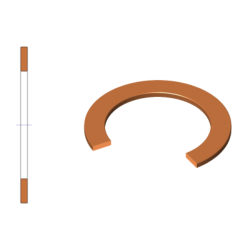
Metric and BSP bonded seals (USIT), copper washers and SAE flange seals, for sealing plugs, adapters and banjo bolts on the thread's seating face.
- Bonded seals (USIT): metal washer with a rubber lip bonded on the inside, which seals against the face and the thread. The usual seal for plugs and adapters with parallel threads.
- Copper washers: seal by being crushed between the two faces. It is best to replace them every time the joint is taken apart.
- SAE flange seals: for the face of SAE flanges, chosen by flange size.
Choose the washer by the thread it will be used on: BSP (G1/4, G1/2...) or metric (M14x1.5, M18x1.5...). If you are unsure of the thread, the BSP and NPT thread guide explains how to identify it. The seating face must be clean and free of scratches.
Technical guide: BSP and NPT threads: how to identify them
Technical guide: How to choose a hydraulic seal
-

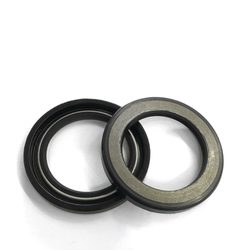
Shaft seals
Rotary shaft seals for pumps, motors, gearboxes and speed increasers: CB and CC seals in NBR and Viton, and pressure-type shaft seals in NBR and Viton for hydraulic pumps and motors.
A shaft seal seals a rotating shaft: it stops oil escaping where the shaft passes through and keeps dirt out. It has a rubber lip pressed against the shaft by a spring.
- CB: metal outer case, single lip;
- CC: rubber-covered outer case, with main lip and dust lip, better in dirty conditions and in aluminium housings;
- Pressure-type seals: reinforced lip that withstands the case drain pressure of hydraulic pumps and motors. A standard seal in a pressurised housing will pop out or leak.
Material: NBR for mineral oil and normal temperatures; Viton (FKM) for higher temperatures and some special fluids.
How to measure: shaft diameter, outside diameter (of the housing) and width, in millimetres. When replacing, check that the shaft has no worn groove where the old lip ran; if it does, fit the new seal slightly offset or have the shaft reconditioned.
The seal finder searches by all three dimensions.
Technical guide: How to choose a hydraulic seal
-

Rod seals
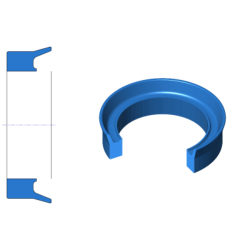
Aston Seal rod seals for hydraulic cylinders: TTU, TTS, TTI, IGR, chevron and other profiles, in polyurethane and PTFE, which stop oil leaking past the rod.
The rod seal sits in the cylinder head and stops oil escaping as the rod moves in and out. It is the hardest-working part of the cylinder: it takes the full pressure, the rod speed and any dirt the wiper did not stop.
Profiles available:
- TTU: polyurethane U-cup, the most common in mobile and industrial cylinders;
- TTS and TTS/L: semi-compact seals that seal well from low to high pressure;
- TTI: U-cup with an asymmetric lip;
- IGR: PTFE ring with O-ring energiser, for low friction and high speed;
- Chevron: V-packing sets for older cylinders or large diameters.
To choose, measure the rod diameter, the groove diameter and the groove width. If the cylinder works in dirty conditions, replace the wiper too. With a scored rod or worn guide rings a new seal will not last: check the rod before fitting.
Use the seal finder to search by dimensions across all profiles.
Technical guide: How to choose a hydraulic seal
-

Piston seals
Piston seals separate the two chambers of a hydraulic cylinder and stop oil passing from one side of the piston to the other. When they wear, the cylinder loses force, creeps down or moves slowly.
Aston Seal profiles available:
- DBM and Tesko: compact double-acting seals with back-up rings and guide rings, for cylinders up to high pressure;
- EGR and TTE: PTFE ring with rubber energiser, for low friction and high speed;
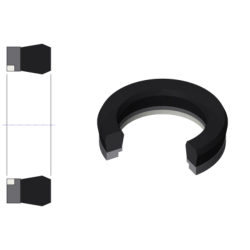
- TTU, TTS, TTQ, TTO: single-acting U-cups and semi-compact seals (fit one on each side for double acting);
- DPS, DSM and type B piston seals, for mobile machine cylinders.
How to measure: the bore diameter (inside diameter of the tube), the groove diameter on the piston and the groove width. Measure the groove, not the used seal, which is deformed.
When repairing, check that the bore is not scored or oval and replace the piston guide rings too: if the piston touches the tube, the new seal will not last.
The seal finder searches all profiles by dimensions. See also Rod seals and Guide rings.
Technical guide: How to choose a hydraulic seal
-

Wipers
Aston Seal wipers for hydraulic cylinders, single, double-acting and metal-cased: they clean the rod as it retracts and keep out dust, mud, water and swarf.
The wiper sits at the entry of the cylinder head. It is the first line of defence for the rod seal: a worn wiper lets in dirt that scores the rod and destroys the seal.
Profiles available:
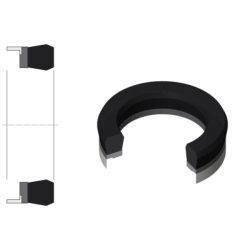
- P5 and PW: single polyurethane wipers with a step, for most cylinders;
- P9, DSR-U and WTF: double-acting wipers, which clean the rod and also hold back the oil film that passes the seal;
- GA and SWP: metal-cased wipers, press-fitted, for very dirty environments such as earthmoving and mining;
- GGW and other specific profiles.
How to measure: the rod diameter, the groove diameter and the groove width. On metal-cased wipers the outside diameter must be exact, because they are held by interference.
Replace the wiper whenever you replace the rod seal. The seal finder searches by dimensions; see also Rod seals.
Technical guide: How to choose a hydraulic seal
-

Guide rings
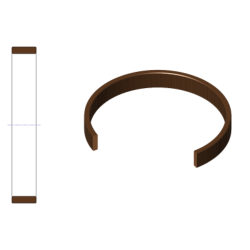
Guide rings and guide tape in PTFE and phenolic resin for hydraulic cylinders: they centre the rod and piston, carry side loads and prevent metal-to-metal contact.
Guide rings work alongside the seals. Without them, or when they are worn, the piston rubs on the tube and the rod rubs on the head, scoring the surfaces and quickly damaging the seals. That is why guide rings are replaced together with the seals in a repair.
- Pre-formed guide rings (including EDWR and IDWR profiles): already at final size, for rod or piston;
- PTFE guide tape: low friction, for higher speeds;
- Phenolic resin guide tape and rings: for high side loads.
Guide tape is sold by length and cut to suit the groove, leaving a small gap between the ends. To choose, measure the rod or bore diameter, the groove width and the guide thickness. The seal finder also searches guide rings by dimensions.
Technical guide: How to choose a hydraulic seal
-

PTFE seals
PTFE seals, wipers and guide tape for rods and pistons: IGR, EGR, Tesko, DS and spring-energised FOI profiles and WTF wipers, for low friction, high speed and high temperatures.
PTFE has very low friction and does not stick to the surface after standing, so the cylinder starts smoothly even at low speed. Because it is not elastic, most profiles have an O-ring under the PTFE ring (IGR on the rod, EGR on the piston) that presses it against the surface. FOI seals use a metal spring instead of the O-ring.
- Rod: IGR and WTF wipers;
- Piston: EGR and Tesko;
- Guiding: PTFE guide tape, cut to length.
To choose, measure the rod or bore diameter, the groove diameter and the groove width. The seal finder searches all profiles; see also Rod seals and Piston seals. If you cannot find the size, send us the groove dimensions.
Technical guide: How to choose a hydraulic seal
-

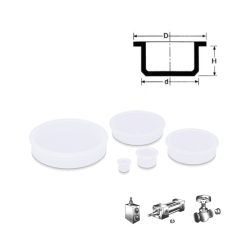
Protective caps
Polyethylene caps and plugs that protect male and female BSP threads from knocks and dirt during transport and storage. Available in the most common BSP sizes.
They are also used to close the ports of pumps, valves and cylinders while they are dismantled in the workshop, so that no dirt gets into the circuit. The cap for male threads covers the outside thread; the plug for female threads fits into the inside thread. Choose by the BSP size of the thread.
-

Adhesives and sealants
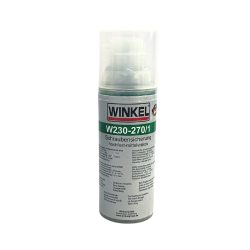
Threadlockers, flange sealants, bearing retainers, thread sealants and silicones from Loxeal and Winkel, for assembly and maintenance of hydraulic equipment.
- Threadlockers in medium strength (removable with normal tools) and high strength (for permanent joints);
- Hydraulic sealant and thread sealant for pipe threads with no other seal;
- Flange sealants, which form the gasket on machined faces of covers, housings and flanges;
- Bearing retainers, for fixing bearings, bushes and gears on shafts;
- Silicone gasket maker and silicone sealant.
Most of these products are anaerobic: they cure in the absence of air, between closely fitting metal parts. For good results the surfaces must be clean, dry and free of oil. Curing time depends on the material and the temperature; wait for it to cure before pressurising the circuit.
Do not use thread sealant on connections that seal by cone, washer or O-ring (BSP with cone, JIC, ORFS, metric DIN): residue can get into the circuit. Use it only where the thread itself is the seal, as on tapered threads.
See also Industrial consumables.
Technical guide: How to choose a hydraulic seal
-

Seal kits
Seal kits for repairing hydraulic pumps, motors and valves: Kawasaki, Linde, Danfoss, M+S, B&C, Hydreco, Ronzio, NEM and Duplomatic.
A kit lets you repair a pump, motor or valve with all its seals at once: M+S orbital motors, Kawasaki, Linde, B&C, Hydreco and Ronzio pumps, Danfoss PVG valves and directional valves, and others. It contains the shaft seals, O-rings and back-up rings in the right sizes for that model. It is cheaper and quicker than gathering each seal separately, and avoids mixing different materials.
How to find the right kit:
- Use the full code of the unit, found on the nameplate of the pump, motor or valve;
- For orbital motors, the kit depends on the series (MM, MP, MR, MS, MT, MV) and sometimes on the shaft;
- For piston pumps, check the size and whether the kit covers the shaft only, the regulator or the whole unit;
- For high temperatures or special fluids, look for the Viton versions.
Before fitting new seals, check that the shaft or rod is not scored: a new seal on a worn surface will leak again. If you cannot find the kit, look for the individual parts in Hydraulic seals or send us the code through the contact form.
Technical guide: How to choose a hydraulic seal
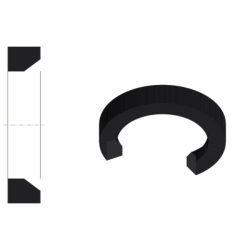
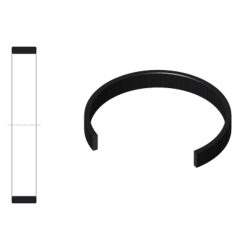
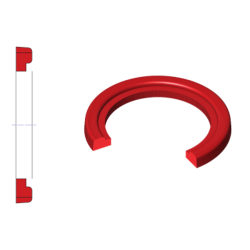
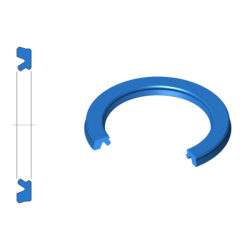
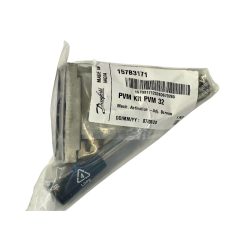






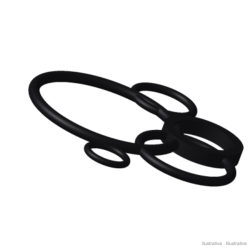
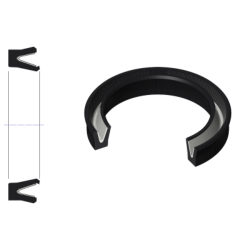
Seals for hydraulic cylinders, pumps, motors and valves: rod and piston seals, wipers, guide rings, O-rings, shaft seals and seal kits, in stock and by size.
In this section you will find:
- Rod seals (TTU, TTI, TTS, IGR and chevron), which stop oil leaking out of the cylinder;
- Piston seals (DBM, Tesko, EGR), which separate the two chambers;
- Wipers (P5, P9, PW, DSR-U and GA metal-cased), which keep dirt out;
- Guide rings and guide tape, which prevent metal-to-metal contact;
- O-rings in NBR and Viton and back-up rings;
- Shaft seals CB, CC and pressure type, PTFE seals, bonded seals and seal kits for pumps and motors.
To choose a seal you need three dimensions: the rod diameter (or the bore, for a piston seal), the groove diameter and the groove width. The material depends on the oil and the temperature: NBR for mineral oil up to about 100 °C, Viton (FKM) for higher temperatures and some special fluids, polyurethane for rod seals and wipers, and PTFE where low friction or high speed is needed.
The seal finder searches these dimensions across all profiles at once. If you only have the worn seal, measure the groove rather than the seal, which deforms with use. For seal kits for a pump or motor, search by the machine model (Kawasaki, Linde, Danfoss, M+S, Ronzio).
Technical guide: How to choose a hydraulic seal
Are you an OEM? Reseller? Workshop?