
- Products
- Hydraulic seals
- Hoses and fittings
- Filtration
- Measurement and sensors
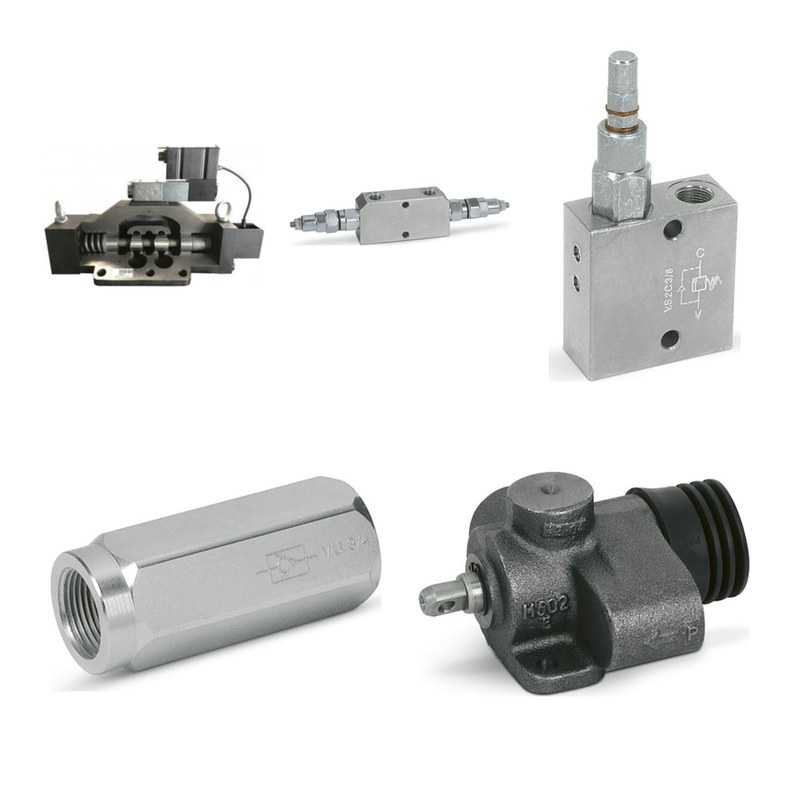
- Valves
- Directional valves
- Proportional valves
- Relief valves
- Check valves
- Counterbalance valves
- Sequence valves
- Pressure reducing valves
- Flow restrictors
- Flow control valves
- Flow dividers
- High-Low Valves
- End-of-stroke valves
- Ball Valves
- Other Valves
- Monoblock and sectional valves
- Coils, connectors and electronics
- NEM - Cartridge valves
- Manifold blocks and subplates
- Pressure intensifiers
- Hidro Orfão Systems
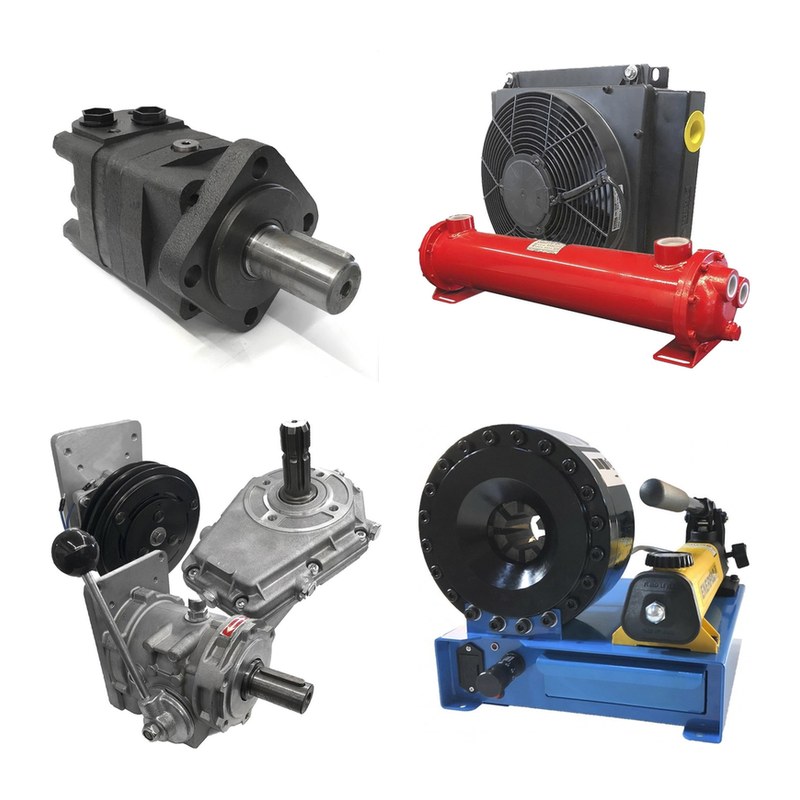
- Pumps
- Transmission
- Motors
- Accumulators
- Cooling
- Mini power packs
- Crimping machines
- Industrial consumables
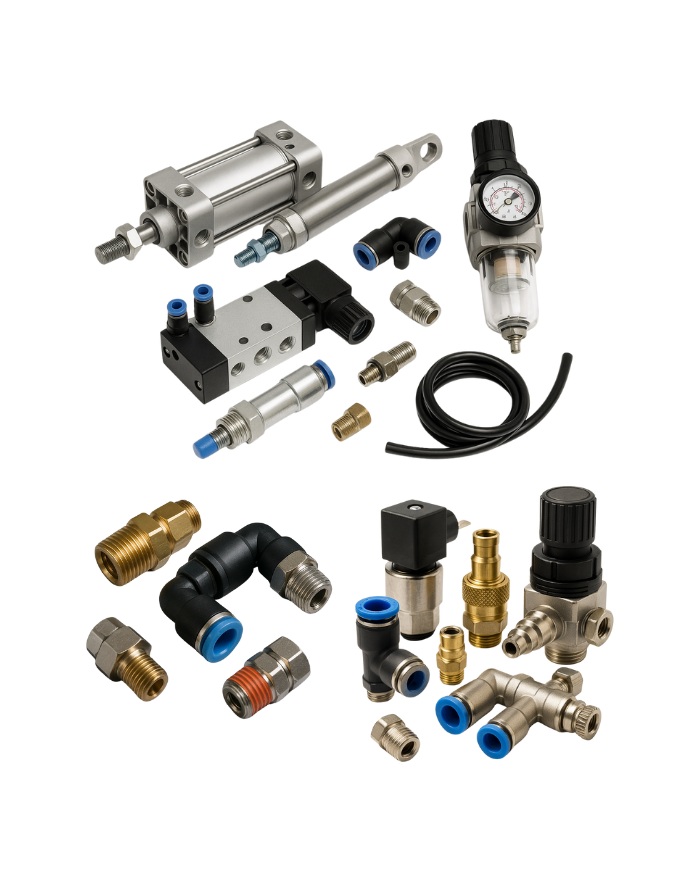
- Pneumatics - End of stock
- Push-in fittings
- Brass and compression fittings
- Flow regulators and check valves
- Air treatment
- Coils and connectors
- Directional valves and solenoid valves
- Manual and mechanical valves
- Solenoid valves for fluids
- Silencers
- Pneumatic tubes
- Pneumatic cylinders
- Cylinder accessories
- Cylinder and seal kits
- Panel controls
- MEB electric motors
- Brands
- Technical library
- Guided search








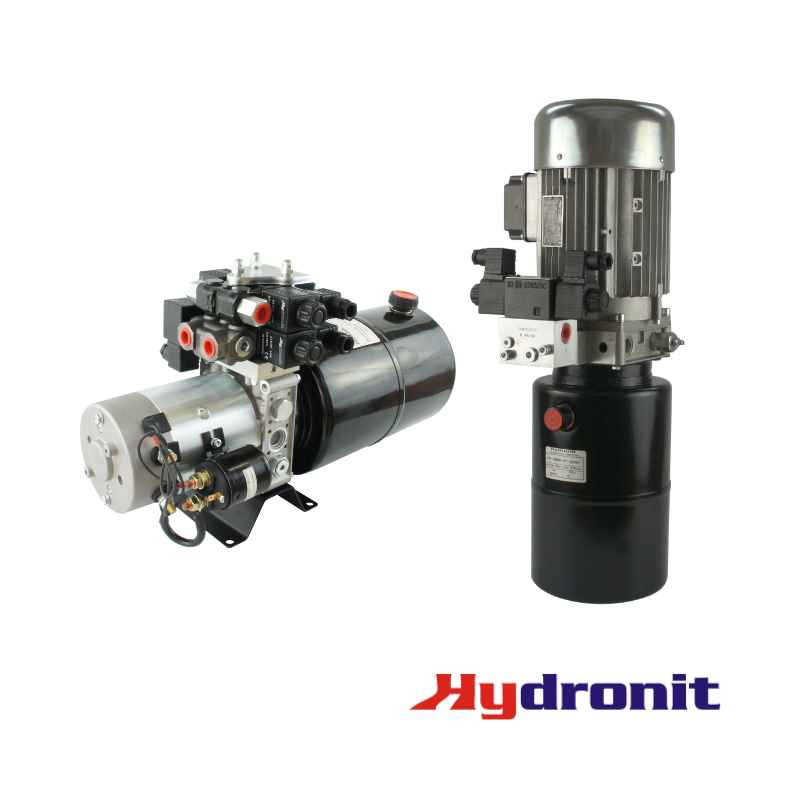
Adapters
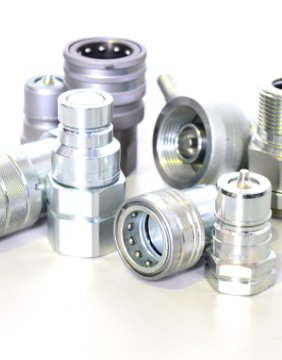
Hydraulic adapters for connecting hoses, tubes and components with different threads, zinc-nickel plated against corrosion: BSP, DIN 2353, JIC, ORFS and flanges. Arranged by type of connection: BSP: nipples, reducers, elbows, tees and plugs with 60° cone;…
Read moreSubcategories
-

BSP adapters
Adapters with BSP thread, the most common in hydraulics in Europe: nipples, reducers, extensions, elbows, tees and plugs, fixed and adjustable, in zinc-nickel plated steel.
There are also expanders, bulkhead fittings and swivel joints. The BSP (British Standard Pipe) thread is sized in inches but the number is not the diameter: a 1/2" BSP thread has an outside diameter of about 20.9 mm. So it is best to measure with a caliper and compare with the thread chart.
The most common ways of sealing BSP:
- 60° cone: the male has a cone that seats in the female;
- Washer, copper or bonded (flat seal);
- O-ring on the male face.
The codes in brackets (for example S940, S950) identify the adapter model. In the names, M is male and F is female. Adjustable versions let you turn the outlet before tightening the locknut, to line up the hose without twisting it.
Note: parallel BSP (BSPP, G thread) and tapered BSP (BSPT, R thread) are not the same. The guide BSP and NPT threads explains how to tell them apart.
Technical guide: BSP and NPT threads: how to identify them
-

Metric DIN 2353
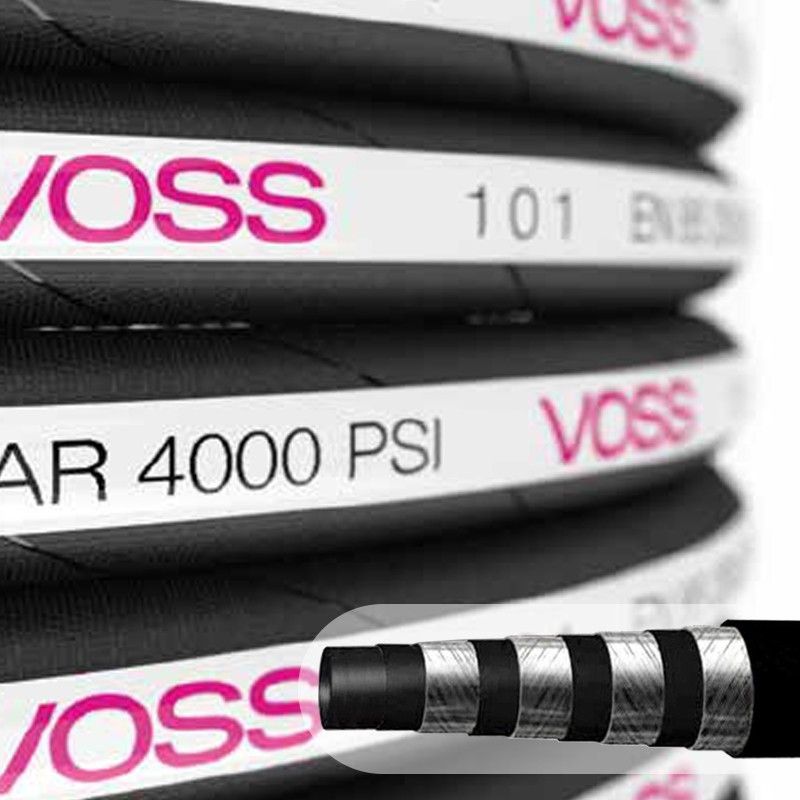
VOSS DIN 2353 (ISO 8434-1) cutting ring fittings for steel tube: the most widely used system for rigid pipework on machines and hydraulic power units in Europe.
You will find tube-to-tube connectors, tube-to-thread connectors for BSP, metric, NPT and UNF, elbows, tees, crosses, bulkhead and weld-on connectors, nuts, rings and plugs, and zinc-plated steel tube.
The fitting is chosen by the tube outside diameter (6, 8, 10, 12, 15, 16, 18, 20, 22, 25, 28, 30, 35, 38, 42 mm) and the series:
- L (light): medium pressures, the most common;
- S (heavy): higher pressures, with larger threads for the same tube.
The L and S series do not mix: a 12 mm tube in L series and in S series uses different nuts and bodies. On the thread end, check the type (BSP, metric, NPT or UNF) and the sealing method (24° cone, washer or O-ring).
Assembly: cut the tube square, deburr it, and tighten the nut until the ring visibly bites into the tube. A ring that has not been tightened enough is the most common cause of leaks on these fittings.
Technical guide: BSP and NPT threads: how to identify them
-

JIC adapters
JIC adapters (SAE J514 standard), with UNF thread and 37° cone: connectors, 45° and 90° elbows, tees and plugs, fixed and adjustable, zinc-nickel plated.
There are male-male and male-female connectors, JIC-BSP, JIC-metric and JIC-UNF connectors, bulkhead connectors and male and female plugs. The JIC connection is widely used on machines of American origin and on many agricultural and construction machines. It seals metal to metal, with the 37° cone of the male against the seat of the female, without a washer or O-ring.
How to recognise a JIC thread:
- Inch thread with UNF pitch (for example 7/16"-20, 9/16"-18, 3/4"-16);
- 37° cone, wider than the 24° cone of metric DIN and narrower than the 60° of BSP.
Do not confuse JIC with SAE 45°: they have the same threads but different cones, and do not seal together. The codes in brackets (for example S600) identify the adapter model; in the names, M is male and F is female.
To confirm the size, use the thread chart and the guide How to identify hose fittings. JIC crimp fittings are under Hose fittings.
Technical guide: BSP and NPT threads: how to identify them
-

ORFS adapters
FOR ORFS adapters (O-Ring Face Seal, SAE J1453 / ISO 8434-3), with UNF thread and an O-ring on the flat face of the male: connectors, elbows, tees and plugs, fixed and adjustable.
There are ORFS-BSP and ORFS-UNF connectors, nipples, bulkhead connectors and male and female plugs. The ORFS connection is one of the most leak-resistant at high pressure and with vibration: the O-ring sits in a groove on the male face and is compressed by the flat face of the female. It is widely used on construction and agricultural machines of American origin and in 400 bar circuits.
How to recognise an ORFS connection:
- The male has a flat face with a groove and an O-ring, no cone;
- The thread is UNF (for example 9/16"-18, 11/16"-16, 13/16"-16);
- The female has a flat face, with no cone seat.
When fitting, always replace the face O-ring: it is cheap and it is what seals. Do not overtighten: the seal comes from the O-ring, not from force.
The guide How to identify hose fittings shows the difference between ORFS, JIC and BSP. ORFS crimp fittings are under Hose fittings.
Technical guide: How to identify hose fittings
-

Test points
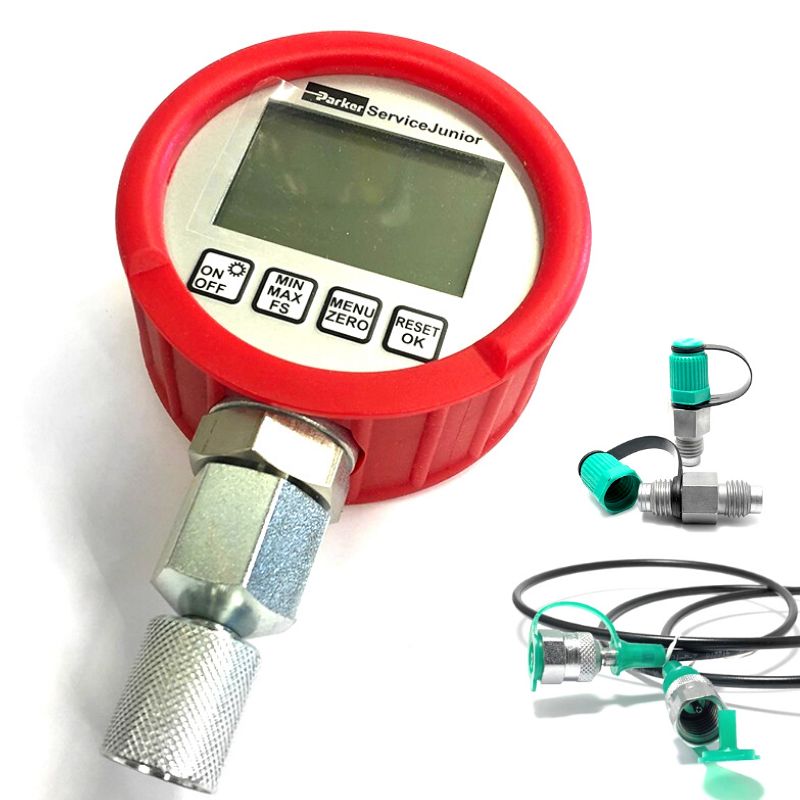
EMA3 test points and connectors with M16x2 thread for connecting gauges and sensors to the circuit without depressurising it. Connectors, elbows and adapters for 1/4" and 1/2" gauges.
A test point has an internal check valve: when the test hose is screwed on, the valve opens, without stopping the machine or losing oil. There are EMA3 test points with BSP, metric, DIN (tube), JIC and UNF threads, in-line and standpipe test points, EMA3 to MAV 1/4" and 1/2" connectors (gauge connection), Tognella gauge isolators and the DN2 test hose with connections.
To set up a measuring point, choose the test point by the port thread or the tube, and the connector by the gauge thread. Pressure gauges and diagnostic kits have their own categories.
-

Flanges
Hydraulic flanges for connecting tube and hose to pumps, motors, manifolds and valves with large flows: SAE 3000 and SAE 6000 weld-on and threaded, straight and 90°.
There are also RF, RD, RG and RGB flanges and flange O-rings. A flange connects without a thread: a face with an O-ring sits against the face of the pump or manifold and is held by four bolts. It is the connection used from about 3/4" and at the highest pressures, where a thread would be too large or would not hold.
The two SAE J518 (ISO 6162) series:
- SAE 3000 (code 61): medium pressures; for the same size, a smaller bolt pattern;
- SAE 6000 (code 62): high pressures, with thicker flanges and larger bolts.
The two series are not interchangeable: check the distance between the holes and the face diameter. The size (1/2", 3/4", 1", 1.1/4"...) refers to the nominal bore, not an outside dimension.
When fitting, replace the O-ring and tighten the four bolts evenly in a cross pattern. Flange fittings that crimp directly onto the hose are under Hose fittings, and the guide How to identify hose fittings has a flange identifier by dimensions.
Technical guide: How to identify hose fittings
Technical guide: SAE flanges 3000 and 6000 (code 61 and 62): how to identify and measure them
-

Miscellaneous
ED BSP and metric plugs, VSTI UNF plugs, steel and brass taper plugs and an aluminium plug with magnet. For closing ports on manifolds, reservoirs and pipework.
- ED plugs: parallel thread with a rubber seal on the face, which seals against the port face;
- VSTI plugs: male plugs with UNF thread;
- Taper plugs, in steel and brass, for closing drillings in manifolds and passages;
- Aluminium plug with magnet (TMA): the magnet holds metal particles in the oil, for example in reservoirs and gearboxes;
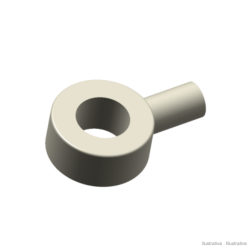
- Also: 1/4" 12L and 1/2" 15L banjos, ⌀13 banjo for 1/4" bolt, 2" x 1" brass reducer and 3/8" BSP x 3/8" NPT nipple.
Choose the plug by the port thread (BSP, metric or UNF) and check the sealing method. For plastic protective caps, see Protective caps.
-

Lubrication
Connectors, elbows, nuts and grease nipples, straight, 45° and 90°, for centralised lubrication lines. For small diameter tube.
The parts follow the DIN cutting ring system: the GE tube-to-thread connector and the WE elbow connect the tube to the lubrication point, with their own nut and bicone. The straight, 45° and 90° grease nipples serve points that are greased with a grease gun. Choose by the tube outside diameter and the thread of the lubrication point.
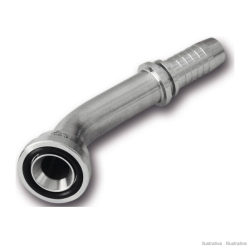
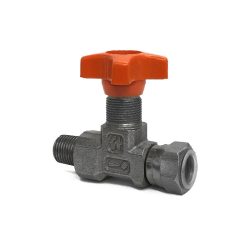
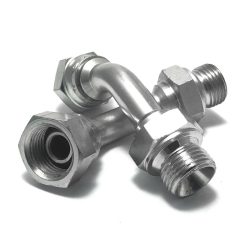
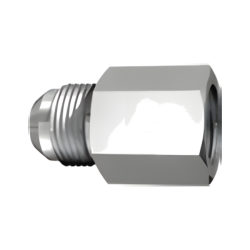

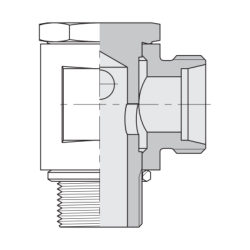
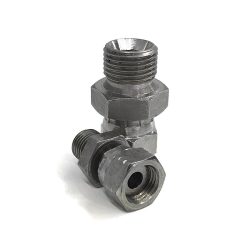
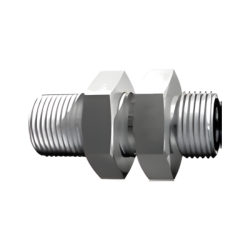
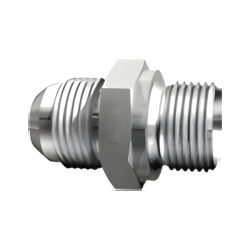
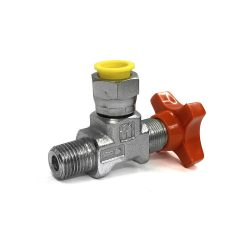
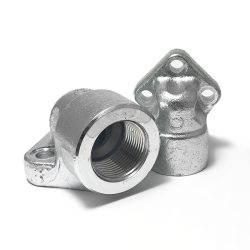
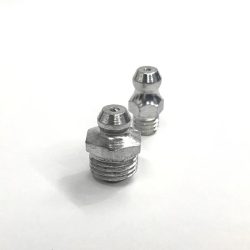
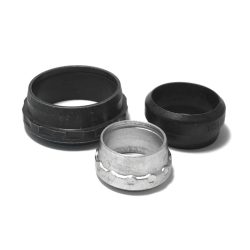

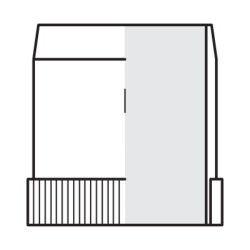
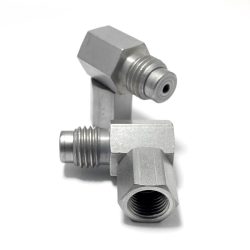
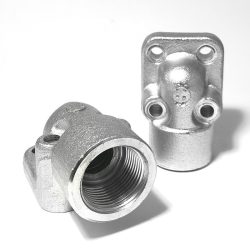
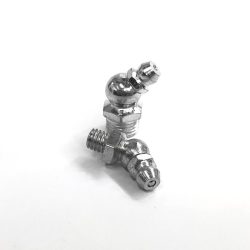
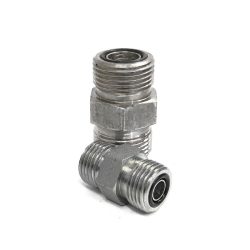
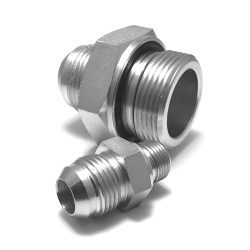
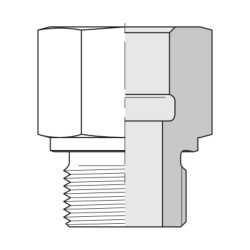
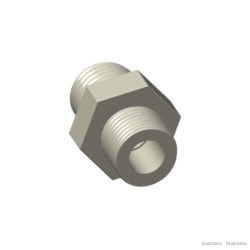
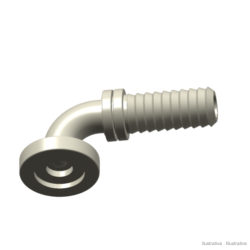
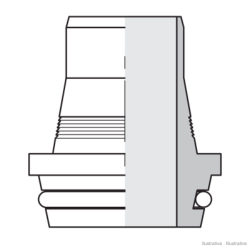
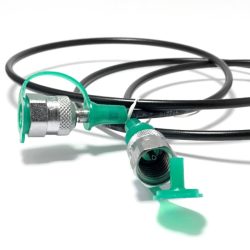
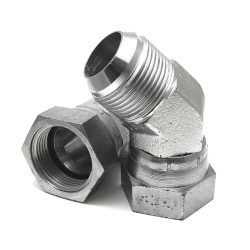
Hydraulic adapters for connecting hoses, tubes and components with different threads, zinc-nickel plated against corrosion: BSP, DIN 2353, JIC, ORFS and flanges.
Arranged by type of connection:
- BSP: nipples, reducers, elbows, tees and plugs with 60° cone;
- Metric DIN 2353: cutting ring fittings for steel tube, L and S series;
- JIC: UNF thread with 37° cone;
- ORFS: flat face with O-ring, for leak-free high pressure;
- SAE 3000 and 6000 flanges, test points, lubrication parts and miscellaneous.
The names show each end: M is male (outside thread) and F is female (inside thread); "M-F BSP" is male on one end and female on the other, both BSP. Adjustable versions can be turned before tightening, which helps to position the hose without twisting it.
To choose, identify the thread on each end: measure the outside diameter of the male with a caliper and count the threads per inch or the pitch in millimetres. The thread chart and the guide How to identify hose fittings help confirm the type. On BSP, sealing is by cone, washer or O-ring, depending on the version. The adapter finder searches by both connections.
Technical guide: BSP and NPT threads: how to identify them
Are you an OEM? Reseller? Workshop?