
- Products
- Hydraulic seals
- Hoses and fittings
- Filtration
- Measurement and sensors
- Valves
- Directional valves
- Proportional valves
- Relief valves
- Check valves
- Counterbalance valves
- Sequence valves
- Pressure reducing valves
- Flow restrictors
- Flow control valves
- Flow dividers
- High-Low Valves
- End-of-stroke valves
- Ball Valves
- Other Valves
- Monoblock and sectional valves
- Coils, connectors and electronics
- NEM - Cartridge valves
- Manifold blocks and subplates
- Pressure intensifiers
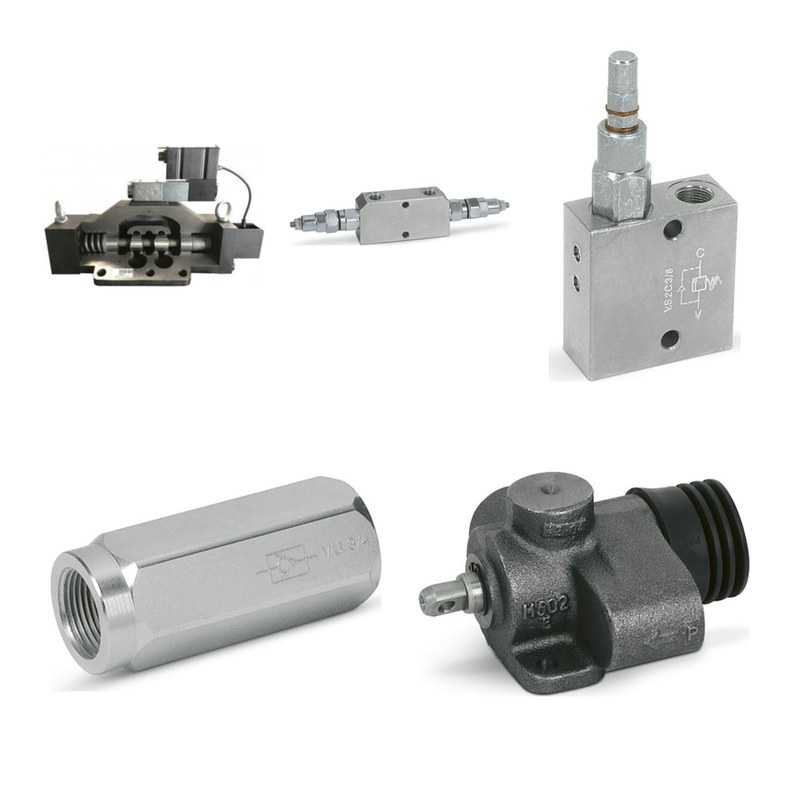
- Hidro Orfão Systems
- Pumps
- Transmission
- Motors
- Accumulators
- Cooling
- Mini power packs
- Crimping machines
- Industrial consumables
- Pneumatics - End of stock
- Push-in fittings
- Brass and compression fittings
- Flow regulators and check valves
- Air treatment
- Coils and connectors
- Directional valves and solenoid valves
- Manual and mechanical valves
- Solenoid valves for fluids
- Silencers
- Pneumatic tubes
- Pneumatic cylinders
- Cylinder accessories
- Cylinder and seal kits
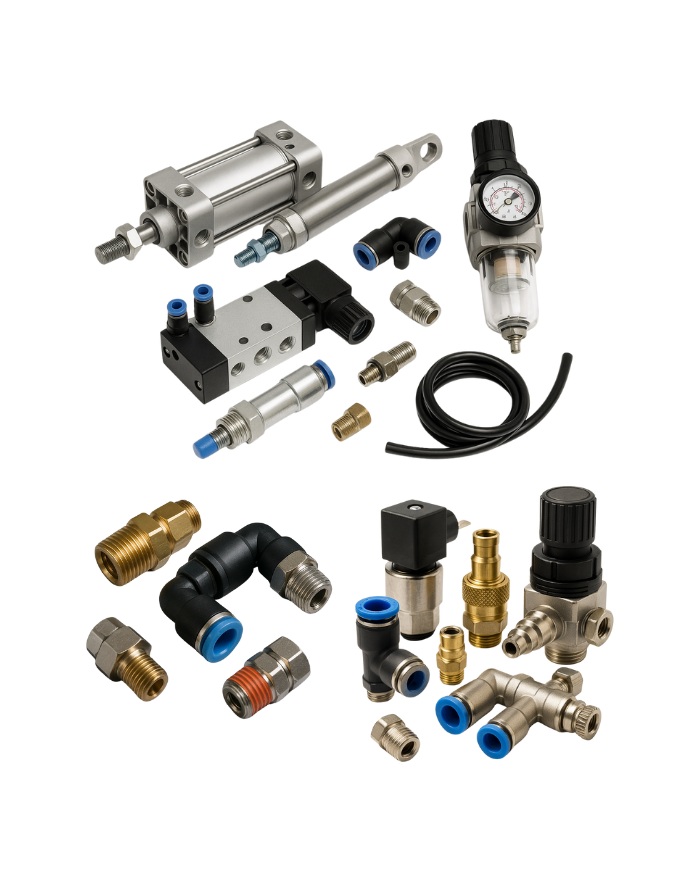
- Panel controls
- MEB electric motors
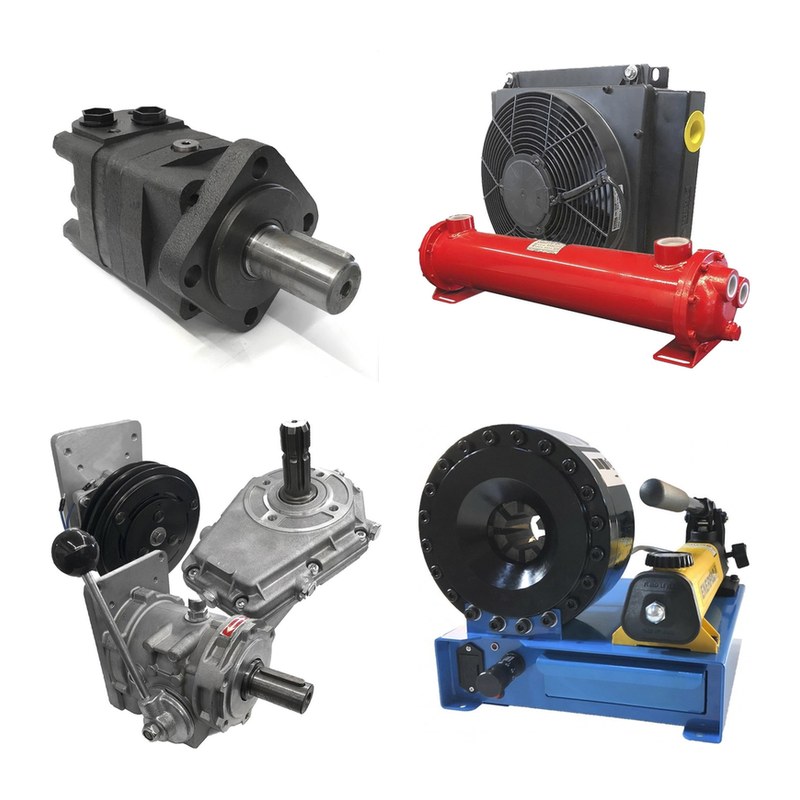
- Brands
- Technical library
- Guided search








Measurement and sensors
Instruments for measuring and monitoring a hydraulic circuit: pressure gauges, level gauges and sight glasses, pressure switches and transducers, oil condition sensors and diagnostic kits. Pressure gauges with 40, 50, 63 and 100 mm dials, glycerine filled,…
Read moreSubcategories
-

Pressure gauges
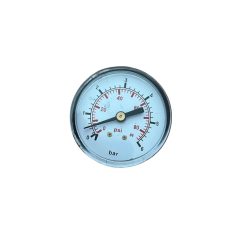
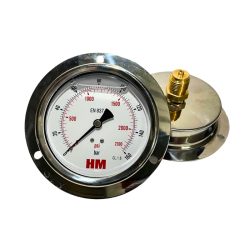
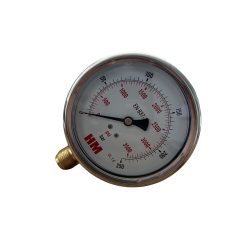
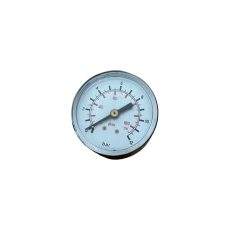
Pressure gauges for hydraulic circuits, arranged by dial diameter: DN40, DN50, DN63 and DN100, digital gauges and other.
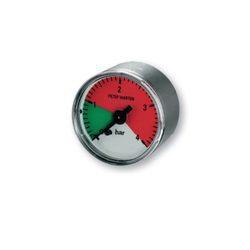
"Other" contains the three-colour filter gauges, the vacuum-pressure gauge and the isolators.
How to choose a pressure gauge:
- Scale: about one and a half to two times the working pressure, so the needle works in the middle of the dial (for example 0-400 bar for a 210 bar circuit);
- Connection: bottom entry or back entry, usually 1/4" BSP;
- Front flange for panel mounting, if needed;
- Diameter: DN63 is the most common; DN100 is easier to read from a distance;
- Glycerine filling, which damps vibration and pulsation and protects the mechanism.
A gauge that is always under pressure wears faster with the peaks. To protect it, fit a gauge isolator (opened only when you want to read) or connect it only when needed, through a test point and a test hose.
Digital gauges and diagnostic kits record peaks and minimum values, which helps to find faults. See also Measurement and sensors.
-

Level gauges and sight glasses
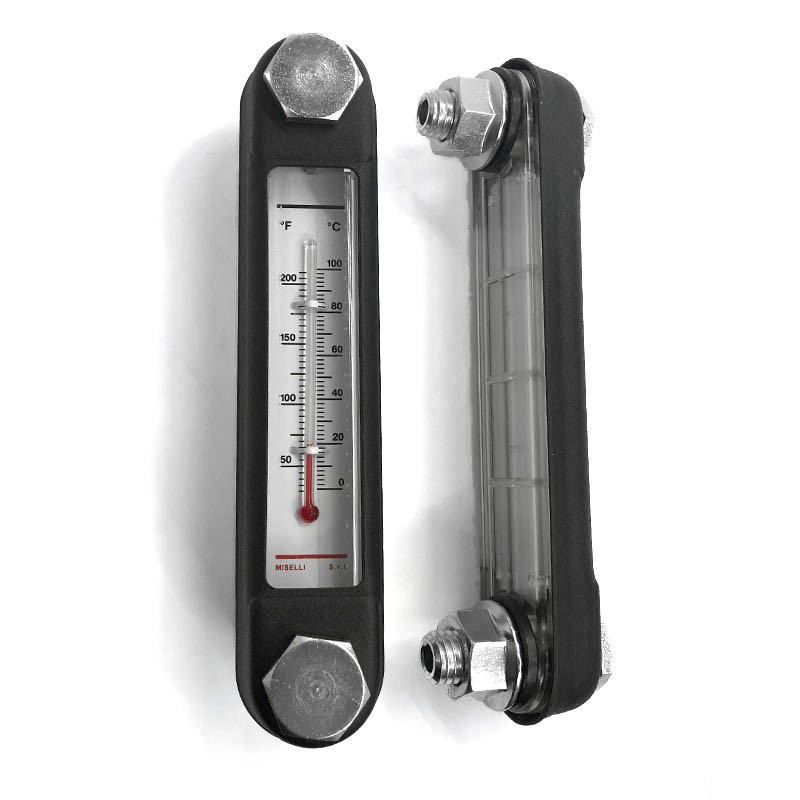
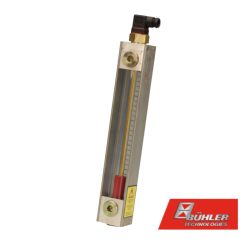
Oil level gauges and sight glasses for hydraulic reservoirs, gearboxes and speed increasers, with and without thermometer, electrical level gauges and level sensors. Miselli, KTR and Bühler brands.
They are under sight level gauges and level float switches. Types:
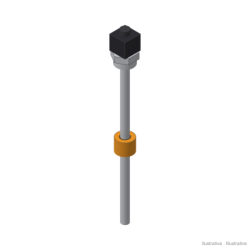
- Sight level gauge: an elongated window that shows the oil height; many have a thermometer;
- Electrical level gauge: as well as showing the level, it has a contact that warns or stops the power unit when the oil falls below minimum;
- Level and temperature sensor (Bühler): analogue output or level and temperature contacts, for power units with automatic monitoring;
- Sight glass: a round threaded window, for checking the level in gearboxes and small tanks.
How to choose a level gauge:
- Distance between the fixing holes (76, 127, 254 mm...), which is the main dimension;
- Bolt thread (M10, M12);
- With or without thermometer, and with or without electrical contact (normally open or closed).
For sight glasses, the dimension is the thread. See also Reservoir accessories.
-

Pressure sensors
Pressure switches and pressure transducers for monitoring and controlling hydraulic circuits: ISO, Bühler and Argo-Hytos pressure switches and 4-20 mA or 0-10 V transducers, with DIN or M12 plug.
- Pressure switch: opens or closes an electrical contact when the pressure passes a set value. Used to start and stop pumps, raise alarms or confirm that a function has reached pressure;
- Electronic pressure switch: with digital display, one or two switching outputs and sometimes analogue or IO-Link output;
- Pressure transducer: gives a continuous signal proportional to pressure (4-20 mA or 0-10 V) to a PLC or display.
How to choose:
- Pressure range: the working value should be within the range, with a margin for peaks;
- Signal: contact (normally open or closed), 4-20 mA, 0-10 V or IO-Link;
- Hydraulic connection (usually 1/4" BSP) and electrical plug (DIN 43650 or M12);
- For pressure switches, the hysteresis: the difference between switch-on and switch-off pressure.
See also Pressure gauges and Measurement and sensors.
-

Diagnostic kits
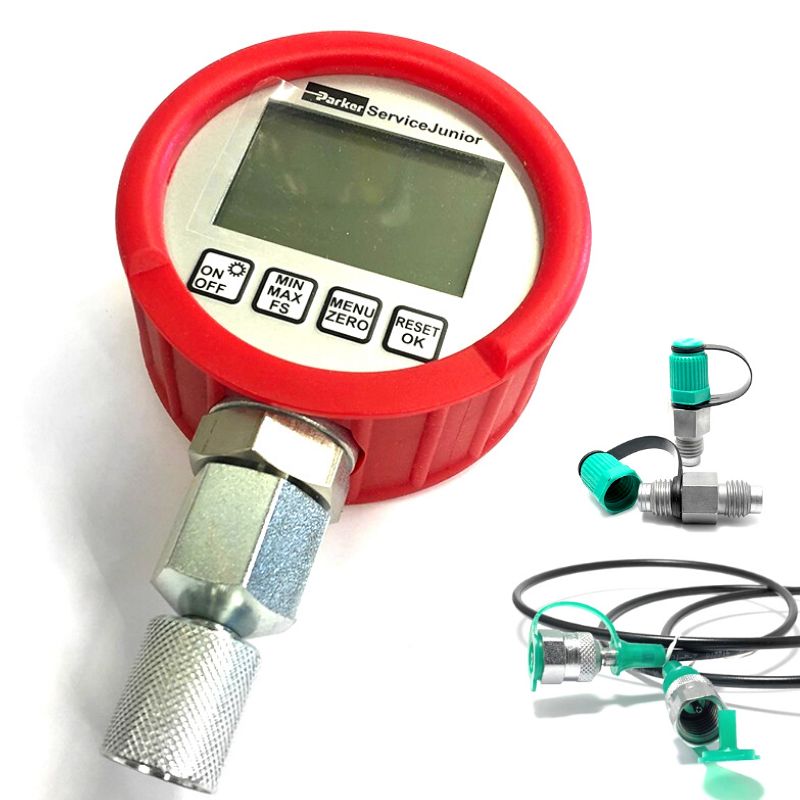
Parker SensoControl diagnostic kits and Service Junior digital gauge up to 600 bar, for measuring pressure in the field and finding faults.
The SensoControl SCKIT-155-2-600 case (CAN kit) brings together the measuring instrument, sensors and accessories in a carrying case; it connects to the machine's test points and records values during operation, showing peaks, pressure drops and response times. The Service Junior SCJN-600-0 is a simple digital gauge, up to 600 bar, for quick readings. Check the kit contents on the product page.
-

Oil condition sensors
Bühler moisture sensors and particle counters for keeping track of oil condition and planning maintenance. They detect water and particles before they cause failures.
- BCM moisture sensors (WS100, WD100), with analogue, switching or IO-Link outputs: they measure water in the oil and temperature;
- BPM particle counter: measures particle contamination continuously;
- CMS monitoring system: combines several sensors in a single unit;
- Argo-Hytos oil sensors and monitors.
With these sensors, oil and filters are changed when the oil needs it, not just by running hours. Choose by signal type and circuit connection. See also Contamination sensors and Auxiliary filtration.

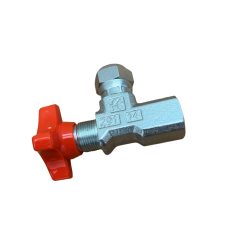
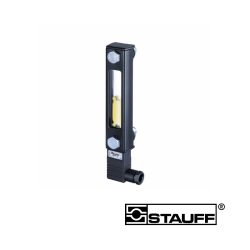


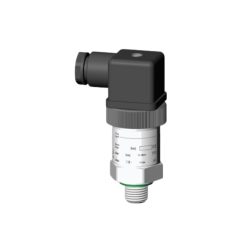

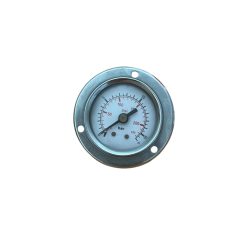

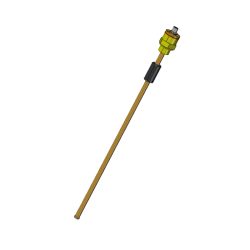

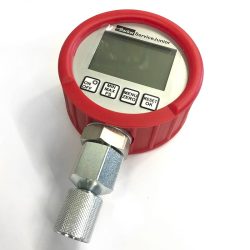


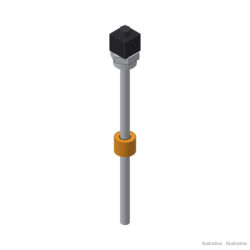


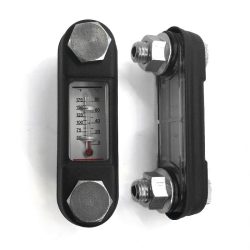
Instruments for measuring and monitoring a hydraulic circuit: pressure gauges, level gauges and sight glasses, pressure switches and transducers, oil condition sensors and diagnostic kits.
- Pressure gauges with 40, 50, 63 and 100 mm dials, glycerine filled, and digital gauges;
- Oil level gauges and sight glasses, with and without thermometer, and electrical level gauges;
- Pressure switches and pressure transducers;
- Oil condition sensors (moisture, temperature) and particle counters;
- Diagnostic kits with sensors, test hoses and test points.
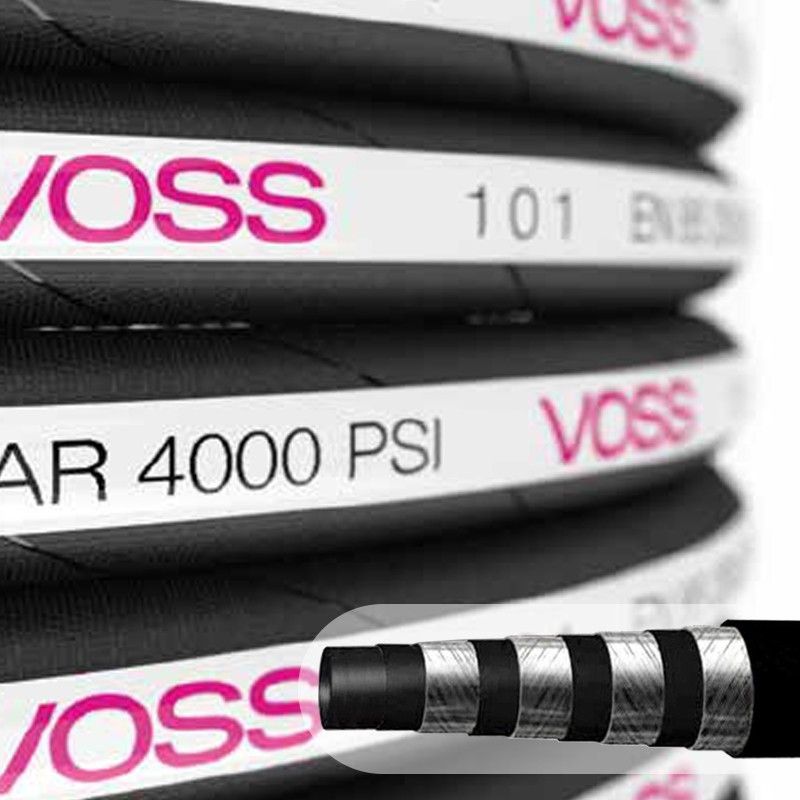
How to choose a pressure gauge: the scale should go up to about one and a half to two times the working pressure, so the needle works in the middle of the dial. The most common connection thread is 1/4" BSP, bottom or back entry. On machines with vibration or pulsation, glycerine filling protects the mechanism. To avoid keeping the gauge under pressure all the time, fit a gauge isolator or use a test point with a test hose.
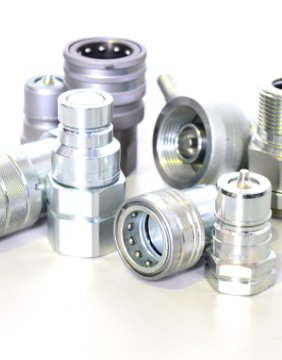
To measure without opening the circuit, test points (EMA3) stay fitted on the machine and the gauge is connected only when needed.
Are you an OEM? Reseller? Workshop?