
- Products
- Hydraulic seals
- Hoses and fittings
- Filtration
- Measurement and sensors
- Valves
- Directional valves
- Proportional valves
- Relief valves
- Check valves
- Counterbalance valves
- Sequence valves
- Pressure reducing valves
- Flow restrictors
- Flow control valves
- Flow dividers
- High-Low Valves
- End-of-stroke valves
- Ball Valves
- Other Valves
- Monoblock and sectional valves
- Coils, connectors and electronics
- NEM - Cartridge valves
- Manifold blocks and subplates
- Pressure intensifiers
- Hidro Orfão Systems
- Pumps
- Transmission
- Motors
- Accumulators
- Cooling
- Mini power packs
- Crimping machines
- Industrial consumables
- Pneumatics - End of stock
- Push-in fittings
- Brass and compression fittings
- Flow regulators and check valves
- Air treatment
- Coils and connectors
- Directional valves and solenoid valves
- Manual and mechanical valves
- Solenoid valves for fluids
- Silencers
- Pneumatic tubes
- Pneumatic cylinders
- Cylinder accessories
- Cylinder and seal kits
- Panel controls
- MEB electric motors
- Brands
- Technical library
- Guided search








Hoses
Hydraulic hose for low, medium and high pressure, suction hose, zinc-plated steel tube for rigid lines and hose protection. Arranged into hydraulic hose, protection, steel tube, suction and other. How to choose the hose: Inside diameter: this is the nominal…
Read moreSubcategories
-

Hydraulic hose
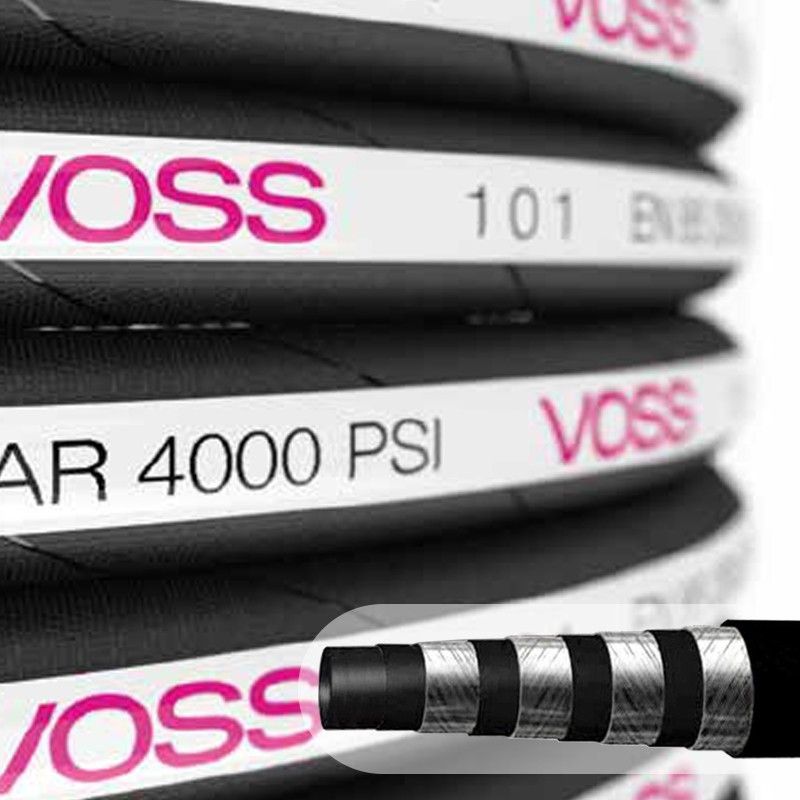
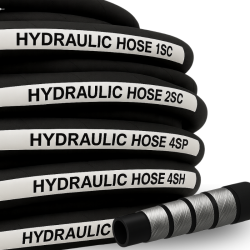
Hydraulic hose by the metre for low, medium and high pressure, 2TE return hose and R7 thermoplastic hose, single and twin line.
A hose is chosen on three points: the inside diameter (DN), the circuit working pressure, peaks included, and the standard printed on the hose (1SN, 2SN, 4SH...), which gives the pressure and the type of reinforcement. The diameter calculator helps you choose the DN for the flow.
- Hydraulic hose with wire reinforcement, in all sizes, for pressure and return lines;
- 2TE: textile reinforced, for low pressure return and drain lines;
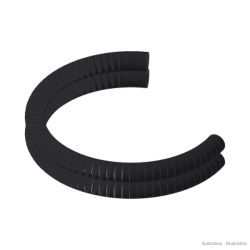
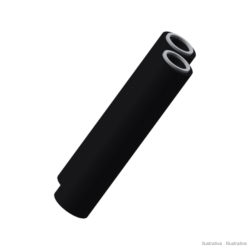
- R7: thermoplastic hose, lighter and more flexible; the twin version joins two lines side by side.
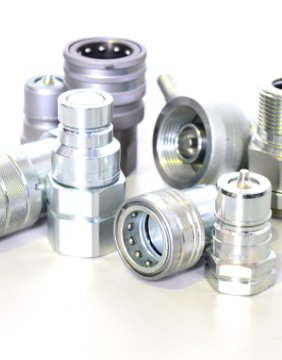
The fitting must match the hose: see the crimp fittings or order a custom hose assembly, already crimped with the fittings and length you choose.
Technical guide: How to choose a hydraulic hose
-

Hose protection
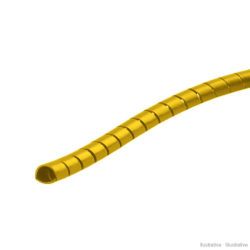
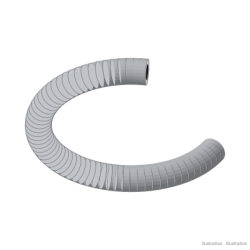
Smart Protections hydraulic hose protection: Kovertec HD plastic spiral guard, yellow spiral guard, steel spring guard and Texlite textile sleeve.
Protection stops the hose wearing through by rubbing against the chassis, other hoses or sharp edges. A hose that rubs loses its outer cover, then its reinforcement, and eventually bursts.
- Plastic spiral guard (Kovertec HD, yellow): wraps around a hose that is already assembled and can also bundle several hoses together;
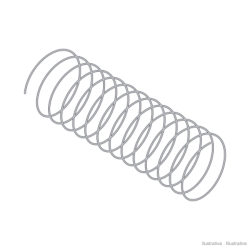
- Steel spring guard: against knocks, crushing and tight bends;
- Textile sleeve (Texlite): slid over the hose before the second fitting is crimped, it protects against abrasion.
Choose the protection by the outside diameter of the hose, which varies with the standard and the inside diameter.
-

Steel tube
Seamless zinc-plated steel tube for rigid hydraulic lines.
Steel tube is used for fixed lines, where there is no movement between the parts. It is connected with DIN 2353 metric adapters with cutting rings, chosen by the outside diameter of the tube. Check the outside diameter and the wall thickness for the circuit pressure, and secure the tube with clamps so that it does not vibrate.
-

Suction hose
Spiral-reinforced suction hose, opaque and transparent.
Suction hose connects the reservoir to the pump inlet. It works under vacuum, so it has a spiral that stops it collapsing. The transparent version lets you see the oil and any air bubbles. Choose a diameter equal to or larger than the pump inlet: a narrow suction line makes the pump cavitate and become noisy. Secure the ends with clamps.
-

Other hoses
R8 twin hose in 3/8" and 5/16", 15/20 bar air hose and PTFE hose with stainless steel braid, smooth bore and convoluted.
These hoses are for uses outside the normal hydraulic line. Twin hose joins two lines side by side, so the feed and return run in a single hose. PTFE hose with stainless braid withstands higher temperatures and fluids that attack rubber; the convoluted version bends to tighter radii. Air hose is for compressed air, not for hydraulic oil. For standard hydraulic hose, see hydraulic hose.




Hydraulic hose for low, medium and high pressure, suction hose, zinc-plated steel tube for rigid lines and hose protection. Arranged into hydraulic hose, protection, steel tube, suction and other.
How to choose the hose:
- Inside diameter: this is the nominal size (DN), in inches or millimetres. A diameter that is too small heats the oil and causes pressure loss; the diameter calculator gives the minimum diameter for the flow.
- Working pressure: choose a hose with a working pressure equal to or higher than the maximum circuit pressure, including peaks.
- Standard and construction: the standard (for example 1SN, 2SN, 4SH) is printed on the hose and tells you the pressure and the type of reinforcement. The number of wire layers alone is not enough to know the standard.
The fitting must match the hose: the manufacturer's crimping table states which fitting and ferrule to use for each hose. For multi-spiral high pressure hoses (such as 4SH) there are also Interlock fittings.
Would you rather have the hose already crimped? The custom hose assembly builds it with the fittings and length you choose.
Technical guide: How to identify hose fittings
Are you an OEM? Reseller? Workshop?