- Products
- Hydraulic seals
- Hoses and fittings
- Filtration
- Measurement and sensors
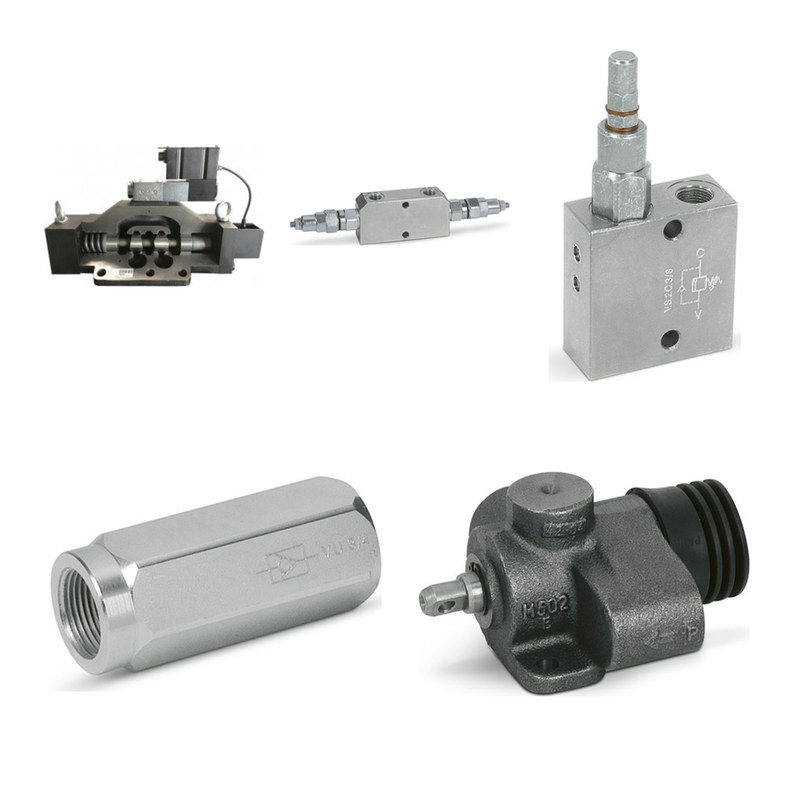
- Valves
- Directional valves
- Proportional valves
- Relief valves
- Check valves
- Counterbalance valves
- Sequence valves
- Pressure reducing valves
- Flow restrictors
- Flow control valves
- Flow dividers
- High-Low Valves
- End-of-stroke valves
- Ball Valves
- Other Valves
- Monoblock and sectional valves
- Coils, connectors and electronics
- NEM - Cartridge valves
- Manifold blocks and subplates
- Pressure intensifiers
- Hidro Orfão Systems
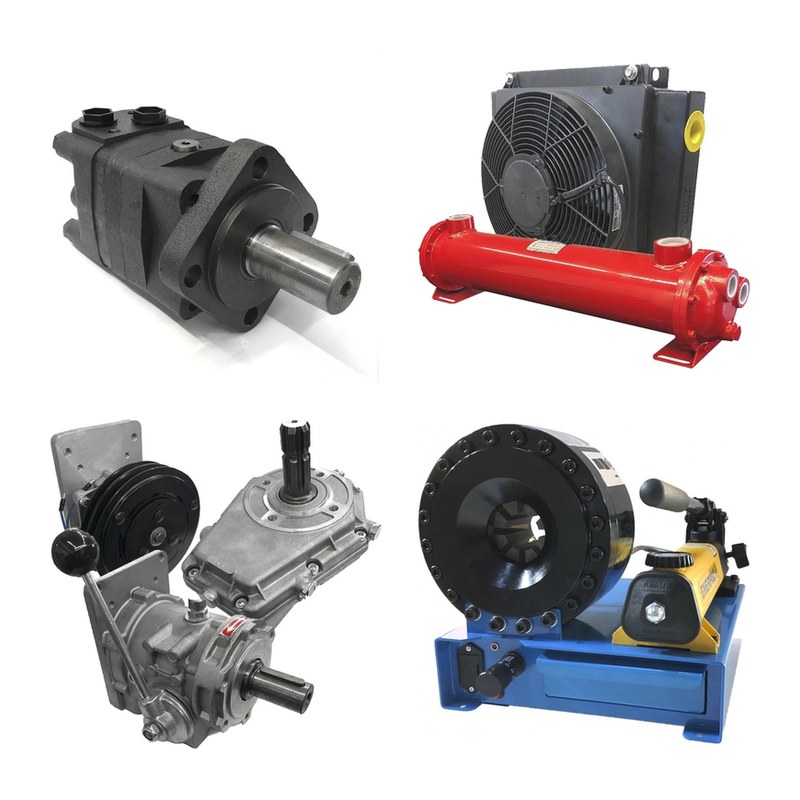
- Pumps
- Transmission
- Motors
- Accumulators
- Cooling
- Mini power packs
- Crimping machines
- Industrial consumables
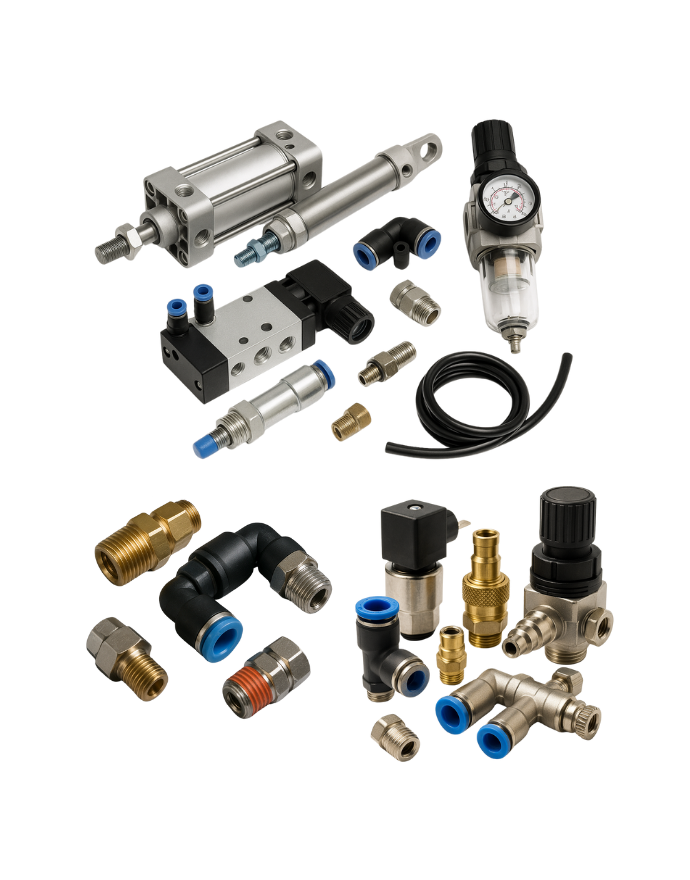
- Pneumatics - End of stock
- Push-in fittings
- Brass and compression fittings
- Flow regulators and check valves
- Air treatment
- Coils and connectors
- Directional valves and solenoid valves
- Manual and mechanical valves
- Solenoid valves for fluids
- Silencers
- Pneumatic tubes
- Pneumatic cylinders
- Cylinder accessories
- Cylinder and seal kits
- Panel controls
- Brands
- Utilities
- Advanced search








Subcategories
-

Hoses
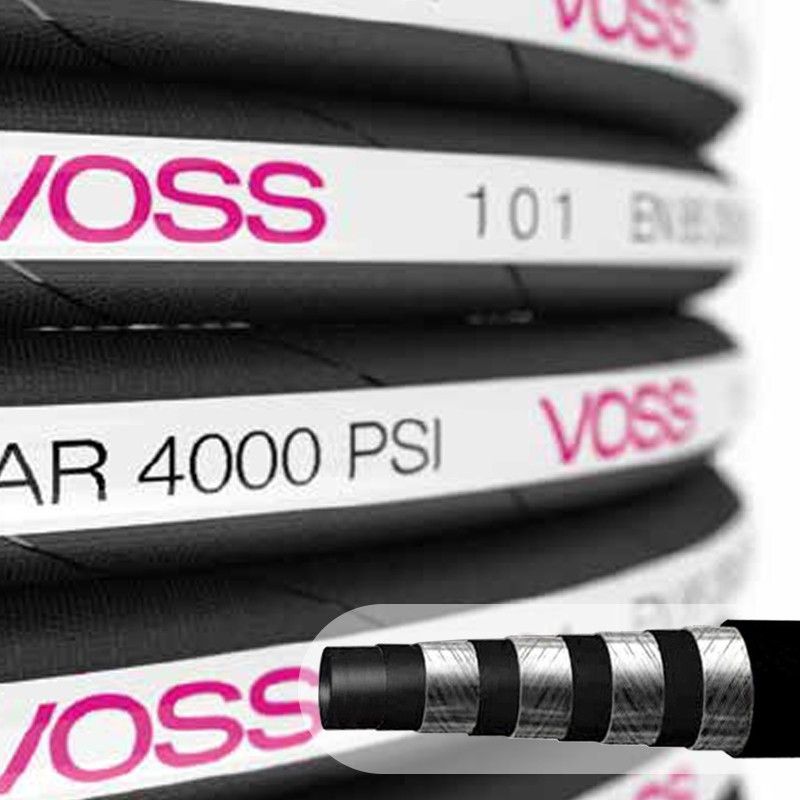
Hydraulic hose for low, medium and high pressure, suction hose, zinc-plated steel tube for rigid lines and hose protection. Arranged into hydraulic hose, protection, steel tube, suction and other.
How to choose the hose:
- Inside diameter: this is the nominal size (DN), in inches or millimetres. A diameter that is too small heats the oil and causes pressure loss; the diameter calculator gives the minimum diameter for the flow.
- Working pressure: choose a hose with a working pressure equal to or higher than the maximum circuit pressure, including peaks.
- Standard and construction: the standard (for example 1SN, 2SN, 4SH) is printed on the hose and tells you the pressure and the type of reinforcement. The number of wire layers alone is not enough to know the standard.
The fitting must match the hose: the manufacturer's crimping table states which fitting and ferrule to use for each hose. For multi-spiral high pressure hoses (such as 4SH) there are also Interlock fittings.
Would you rather have the hose already crimped? The custom hose assembly builds it with the fittings and length you choose.
Technical guide: How to identify hose fittings
-

Hose fittings
Fittings to crimp onto hydraulic hoses, with their ferrules: BSP, metric DIN, JIC, ORFS, JIS, SAE flanges, banjos and Interlock.
We stock BSP, metric DIN (L and S series), JIC, ORFS, JIS, French, SAE 3000 and 6000 flange and SuperCAT, banjo, standpipe, flat-face BSP and hose joiner fittings, straight, 45° and 90°, and Interlock versions for high pressure hoses.
How to identify the connection:
- BSP: inch thread, 60° cone;
- Metric DIN: fine metric thread, 24° cone (with or without O-ring); L (light) and S (heavy) series with different tube diameters;
- JIC: UNF thread, 37° cone;
- ORFS: flat face with O-ring on the male;
- SAE flange: no thread, held by four bolts; code 61 is for 3000 psi and code 62 for 6000 psi.
Measure the outside diameter of the male thread (or the inside of the female) with a caliper and count the threads per inch or the pitch in millimetres. The guide How to identify hose fittings has an identifier that does the calculation for you.
The fitting must be the right series for the hose: check the crimping table. The hose fitting finder searches by connection and size, and the custom hose assembly builds the complete hose.
Technical guide: How to identify hose fittings
-

Adapters
Hydraulic adapters for connecting hoses, tubes and components with different threads, zinc-nickel plated against corrosion: BSP, DIN 2353, JIC, ORFS and flanges.
Arranged by type of connection:
- BSP: nipples, reducers, elbows, tees and plugs with 60° cone;
- Metric DIN 2353: cutting ring fittings for steel tube, L and S series;
- JIC: UNF thread with 37° cone;
- ORFS: flat face with O-ring, for leak-free high pressure;
- SAE 3000 and 6000 flanges, test points, lubrication parts and miscellaneous.
The names show each end: M is male (outside thread) and F is female (inside thread); "M-F BSP" is male on one end and female on the other, both BSP. Adjustable versions can be turned before tightening, which helps to position the hose without twisting it.
To choose, identify the thread on each end: measure the outside diameter of the male with a caliper and count the threads per inch or the pitch in millimetres. The thread chart and the guide How to identify hose fittings help confirm the type. On BSP, sealing is by cone, washer or O-ring, depending on the version. The adapter finder searches by both connections.
Technical guide: BSP and NPT threads: how to identify them
-

Quick couplings
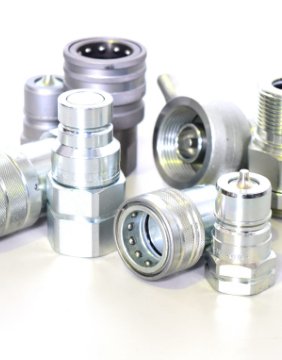
DNP hydraulic quick couplings, male and female, for connecting and disconnecting hoses without losing oil, in the standards most used on agricultural, forestry and construction machinery and in industry.
- ISO-A (ISO 7241-A) and ISO-B;
- Flat face, SAE flat face and screw-to-connect flat face, which let in less dirt and lose less oil when disconnected;
- ISO 14541, Faster NV, Tema T, TNV, Roflex, PVS, PVS-F and VCR;
- Heavy-duty for hard work and caps and protection.
How to choose: two couplings of different standards do not connect to each other, even with the same thread. First confirm the standard of the coupling already on the machine (it is often stamped on the body), then the size and the thread that connects to the hose or adapter. If the coupling is connected with pressure in the circuit (on a tractor with the engine running, for example), choose a model made for connecting under pressure.
To identify the thread on the other end, see the guide BSP and NPT threads.
-

Clamps
Single and twin jaw clamps, weld plates and metal clamps for securing hydraulic tubes and hoses. Choose by the tube outside diameter.
Hydraulic tube clamps (DIN 3015 type) hold the tube between two jaws, tightened by a cover plate and bolts, and sit on a weld plate (APIN) or directly on the chassis. They hold the tube and damp vibration, which would otherwise crack tubes and loosen fittings. Twin versions hold two tubes side by side.
There are also single and twin clamp jaw halves, a metal clamp and a complete aluminium clamp. Fit clamps close to bends and fittings and at regular intervals on long lines.
Are you an OEM? Reseller? Workshop?